
VP2786a-4K
Introduction
Package Contents
- Monitor
- Power Cord
- Video Cable
- Quick Start Guide
Product Overview
-
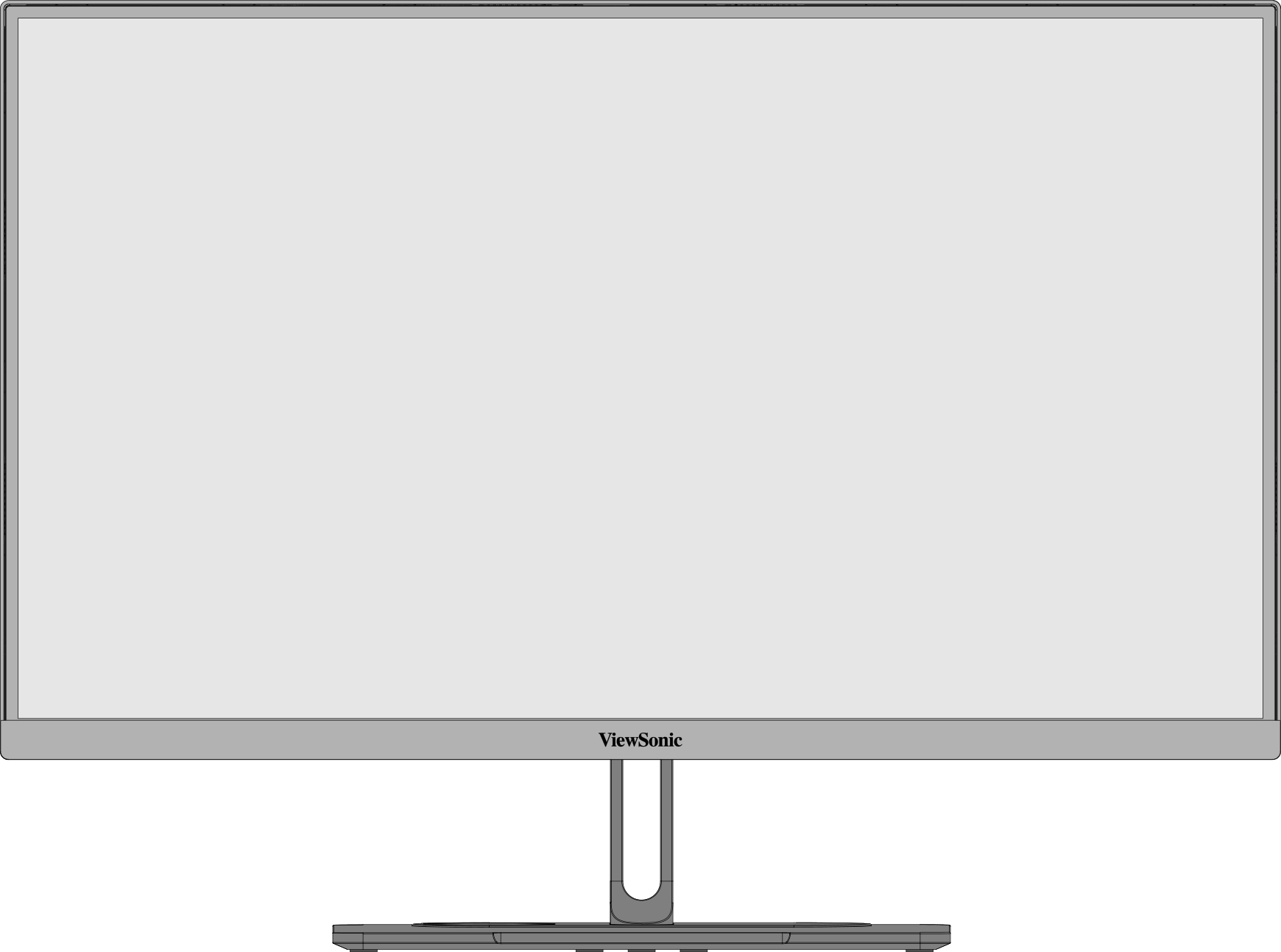 Front View
 -
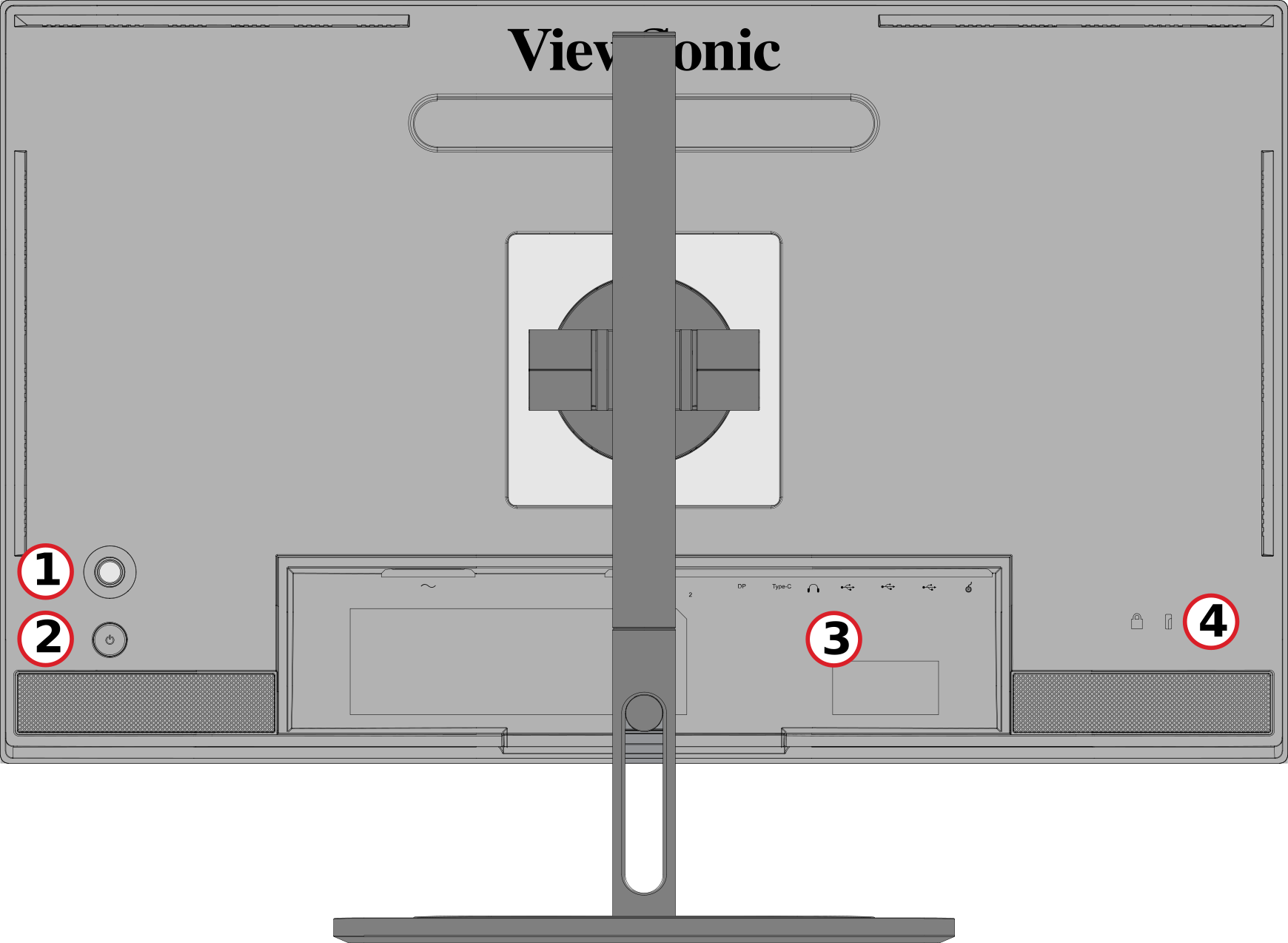 Rear View


| Number | Description |
|---|---|
| 1 | Joy Key |
| 2 | Power Button |
| 3 | I/O Ports |
| 4 | Security Lock Slot |
I/O Ports

| Number | Description |
|---|---|
| 1 | AC IN |
| 2 | HDMI |
| 3 | DisplayPort |
| 4 | USB Type C |
| 5 | Audio Out |
| 6 | USB Upstream |
| 7 | USb Downstream |
| 8 | Micro USB |


Initial Setup
Installing the Stand
 |
 |
- Place the monitor on a flat, stable surface with the screen facing down.
- Align and slide the upper hooks of the monitor stand into the stand mounting slots.
- Lift the monitor into its upright position on a flat, stable surface.
Removing the Stand and Mounting the Monitor
Refer to the table below for the standard dimensions for mounting kits.
| Maximum Loading | Pad Hole | Screw Specification | Screw Quantity |
|---|---|---|---|
| 14 kg | 100 x 100 mm | M4 x 10 mm | 4 screws |
 |
 |
 |
- Press and hold the quick release tab and carefully lift the stand.
- Pull down slightly to disengage the hooks and remove the stand.
- Attach the mounting bracket to the VESA mounting holes at the rear of the monitor. Then secure it with four screws (M4 x 10 mm).
- Follow the instructions that come with the purchased or optional mounting kit to mount the monitor.
Using the Security Slot

To help prevent the monitor from being stolen, use a security slot locking device to secure the monitor to a fixed object.
Additionally, fastening the monitor to a wall or fixed object using a security cable can help support the weight of the monitor in order to prevent the monitor from falling over.
Making Connections
Connecting to Power

- Connect the power cord to the AC IN jack at the rear of the monitor.
- Plug the power cord plug into a power outlet.
Display Connection
HDMI

- Connect one end of an HDMI cable to an HDMI port of the monitor.
- Plug the other end of the cable into the HDMI port of your computer.
DisplayPort

- Connect one end of a DisplayPort cable to the DP port of the monitor.
- Plug the other end of the cable into the DisplayPort or Mini DisplayPort port of your computer.
Type C

- Connect one end of a USB Type C cable to the Type C port of the monitor.
- Plug the other end of the cable into the USB Type C port of your computer.
USB Connection
The monitor supports two types of USB ports, upstream and downstream. When making connection(s), observe the following guideline.

| USB Type | Connection Type | Description | |
|---|---|---|---|

|
Upstream | Type B | Transfers data between the computer and the USB devices connected to the monitor. |

|
Downstream | Type C | Transfers audio, video, and power. Enables the KVM function. |
| Supports 5V/3A, 9V/3A, 12V/3A, 15V/3A, 20V/3.25A (LPS) charging. | |||

|
Type A | For peripheral device(s) (e.g., storage device, keyboard, mouse, etc.). | |
| Supports 5V/2A charging. | |||

|
Micro USB | For use with the ColorPro™ Wheel only. | |
Using the USB Ports

- To use the downstream USB Type A ports, connect one end of the USB Type B cable to the upstream USB Type B port of the monitor. Plug the other end of the cable, USB Type A, into a USB port of your computer.
- Connect your peripheral device(s) to a downstream USB Type A port of the monitor.
Audio Connection

Plug the audio jack of the audio device into the Audio Out port of the monitor.
Using the Monitor
Adjusting the Viewing Angle
Height Adjustment

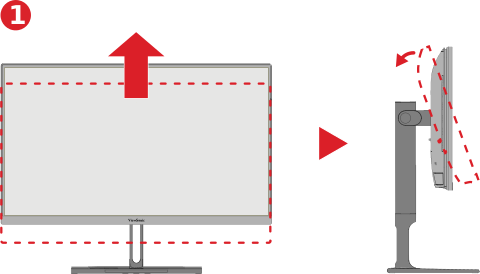
Lower or raise the monitor to the desired height (0 to 130 mm).
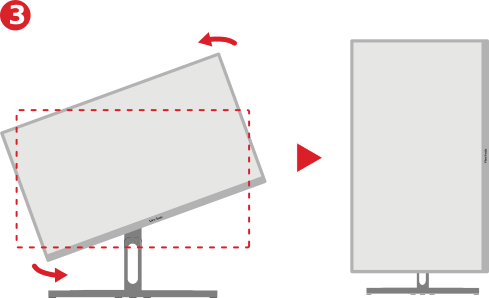
Screen Orientation Adjustment (Monitor Pivot)
 |
 |
 |
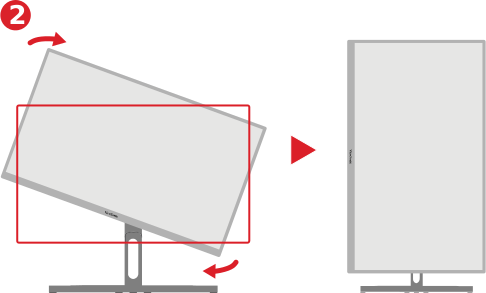
- Adjust the monitor height to the highest position. Then tilt the monitor backwards to the full tilt position.
- Rotate the monitor 90° clockwise or counterclockwise (3) from landscape to portrait orientation.
- When adjusting, make sure to hold both sides of your monitor firmly with both hands.
- If using the Auto Pivot function, the system can detect the screen orientation automatically.
Swivel Adjustment

Swivel the monitor to the left or right for the desired viewing angle (60˚).
Tilt Adjustment

Tilt the monitor forwards or backwards to the desired viewing angle (-5˚ to 21˚).
Turning the Monitor On/Off

- Plug the connected power adapter into a power outlet.
- Press the Power ( ) button to turn on the monitor.
- To turn the monitor off, press the Power ( ) button again.
- If the OSD Menu is still on screen, press and hold the Power ( ) button for three seconds to power off.
- The monitor will still consume some power as long as the power cord is connected to the power outlet. If the monitor is not being used for a long period of time, please disconnect the power plug from the power outlet.
Using the Joy Key
Use the Joy Key to activate Hot Keys, navigate the On-Screen Display (OSD) Menu, and change settings.

Startup Menu
Move the Joy Key (  ) to activate the Startup Menu.

Main Menu
Enter the On-Screen Display (OSD) Menu.

Color Mode
Select one of the preset standard color settings.

ViewMode
Select one of the preset display settings.

Brightness
Adjust the brightness level.

Input
Select the input source.

Volume
Adjust the volume settings.

 ) to return to the previous menu.
Hot Keys
When the On-Screen Display (OSD) Menu is off, you can quickly access special functions by using the Joy Key.
| Key | Description |
|---|---|
 |
Press and hold the key for five seconds to activate/deactivate LED lighting.
 |
 |
Press and hold the key to lock/unlock the OSD Menu. When the menu appears on the screen, continue holding the key for 10 seconds to lock/unlock the OSD Menu.
 If the OSD Menu is locked, the below message will appear on the screen:  |
 |
Press and hold the key to lock/unlock the Power ( ) button. When the menu appears on the screen, continue holding the key for 10 seconds to lock/unlock the Power ( ) button.  If the Power ( ) button is locked, the below message will appear on the screen.  |
 |
Press and hold the key for 10 seconds to display/hide the boot up screen when the device is turned on.  |
 |
Press and hold the key for 10 seconds to activate/deactivate Ultra Fast.  |