


| Sub-menu | Menu Option | ||
|---|---|---|---|
| H Position | (-/+, 0~100) | ||
| V Position | (-/+, 0~100) | ||
| Clock | (-/+, 0~100) | ||
| Clock Phase | (-/+, 0~100) | ||
| Zoom Mode | Full | ||
| Normal (4:3) | |||
| Real (1:1) | |||
| Dynamic (16:9) | |||
| 21:9 | |||
| Auto Adjust | OK | ||
| Screen Reset | Cancel | ||
| Reset | |||
IFP55G1
From ViewSonic Documentation
Package Contents
Note: The power cord and video cables included in your package may vary depending on your country. Please contact your local reseller for more information.
-
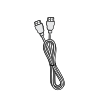 HDMI Cable
(3 m) -
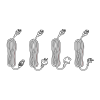 Power Cord
(ship by region) -
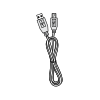 USB Touch Cable (3 m)
 -
 Remote Control
 -
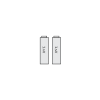 AAA Battery x 2
 -
 Compliance Statement
 -
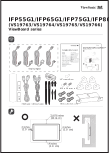 Quick Start Guide
 -
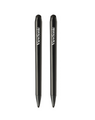 Touch Pen x 2
 -
 Replacement Pen Nib x 4
 -
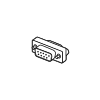 RS-232 Adapter
-
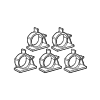 Clamp x 5
 -
 Wall Mount Screws
 -
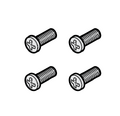 Wall Mount Screws (M8 x 25mm x 4)
 -
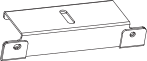 Camera Plate
Wall Mount Kit Specifications (VESA)

| Model | VESA Spec. (A x B) |
Standard Screw (C x D) |
Quantity |
|---|---|---|---|
| IFP55G1 | 400 x 200 mm | M8 x 25 mm | 4 |
NOTE:
- Please follow the instructions in the wall mount installation guide to install your wall mount (check here) or mobile mount bracket (check the video here). If attaching to other building materials, please contact your nearest dealer.
- Do not use screws that are longer than the standard dimension, as they may cause damage to the inside of the display.
Product Overview
Front Panel

Rear Panel

Control Panel

| Number | Item | Description |
|---|---|---|
| 1 | 
|
Decrease screen brightness. |
| 2 | 
|
Increase screen brightness. |
| 3 | 
|
Decrease the volume. |
| 4 | 
|
Increase the volume. |
| 5 | 
|
Disable/Enable the touch screen. |
| 6 | 
|
Launch the Menu system. |
| 7 | 
|
|
I/O Panels
Front I/O
Overview

Front I/O

| Number | Port | Description |
|---|---|---|
| 1 | USB |
|
| 2 | USB |
|
| 3 |
|
Remote control receiver |
| 4 |
|
Ambient Light Sensor |
Rear and Side I/O
Overview

Rear I/O

| Number | Port | Description |
|---|---|---|
| 1 | USB |
|
| 2 | RS-232 | Serial interface; used for mutual transfer of data between devices |
| 3 | LAN | Standard RJ45 (10M/100M/1000M) Internet connection interface. Features hub support for network sharing. |
Side I/O

| Number | Port | Description |
|---|---|---|
| 1 | VGA | External computer video input |
| 2 | AUDIO OUT | Audio output to an external speaker/headset |
| 3 | AUDIO IN | External computer audio input |
| 4 | USB |
|
| 5 | TOUCH 1 |
|
| 6 | HDMI 1 |
|
| 7 | HDMI 2 |
|
| 8 | HDMI 3 |
|
| 9 | TOUCH 2 |
|
| 10 | 
|
|
Remote Control Overview

| Number | Item | Description |
|---|---|---|
| 1 | Power ON/OFF | |
| 2 | 
|
Mute/Unmute |
| 3 | SLEEP | Sleep Mode |
| 4 | DISPLAY | For Non-Android sources; display current input source information |
| 5 | P.MODE | Blank screen |
| 6 | FREEZE | Freeze screen |
| 7 | Numeric input buttons | |
| 8 | ALT+TAB
-/-- |
Slot-in computer, space bar Alt+Tab |
| 9 | ALT+F4
|
Slot-in computer, close program window |
| 10 | INPUT | Input source selection |
| 11 | ASPECT | Back to slot-in system main interface |
| 12 | MENU | For Android, access Settings; for other sources, access Touch Menu settings |
| 13 | ALT |
Screen capture |
| 14 | TAB |
PC[1] [Tab] button |
| 15 | DESKTOP |
Switch to slot-in PC desktop |
| 1 |  |
PC[1] [Backspace] button |
| 17 | START / D.MENU | PC[1] [Windows] button |
| 18 |  / D.TITLE / D.TITLE
|
PC[1] [Menu] button |
| 19 |  / D.USB / D.USB
|
Writing software setup |
| 20 | EPG / BACK | Return button |
| 21 | ▼/▲/◄/► | Scroll up, down, left, and right |
| 22 | ENTER | Confirm selection/state |
| 23 | ESC / EXIT /
D.SETUP |
Shortcut button to exit dialogue boxes |
| 24 | CH.+ / PGUP / CH.+ / PGDN | CH+: PC previous page
CH-: PC next page |
| 25 | VOL+ / VOL- | Increase/Decrease volume |
| 26 | FAV / SPACE | PC[1] [Space] button |
| 27 | F1-F12 | Built-in computer F1~F12 function button |
Inserting Remote Control Batteries
To Insert batteries into the remote control:
- Remove the cover on the rear of the remote control.
- Insert two “AAA” batteries, ensuring the “+” symbol on the battery matches the “+” on the battery post.
- Replace the cover by aligning it with the slot on the remote control and snapping the latch shut.
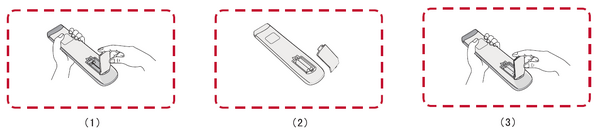
- WARNING: There is a risk of explosion if batteries are installed with incorrect polarity.
Note:
- It is recommended that you do not mix battery types.
- Always dispose of old batteries in an environmentally friendly way. Contact your local government for more information on how to dispose of batteries safely.
Remote Control Effective Range
The working range of the remote control is shown here. It has an effective range of 8 meters, 30° degrees left and right. Ensure there is nothing obstructing the remote control’s signal to the receiver.

Using Gestures
Touch gestures allow the user to use pre-determined commands without using a keyboard or mouse. Using gestures on the ViewBoard, the user can select/deselect objects, change the location of an object, access settings, erase digital ink, and much more.
Select and Deselect an Object (Clicking)
| Press and release the ViewBoard to select/deselect options or objects. This is like a single, standard left mouse click. |  |
Display Menu Options (Right-Clicking)
| Press and hold the ViewBoard with your finger. This is like a single, standard right mouse click. |  |
Double-Clicking
| Quickly press and release twice in the same location on the ViewBoard. This is like a double, standard left mouse click. |  |
Moving an Object
| Press and hold the object on the ViewBoard and slowly drag it with your finger to your desired location. |  |
Erasing Digital Ink
| Use your flattened hand, palm, or fist on the ViewBoard and move your hand across the area which you wish to erase. |  |
Swipe Up for General Settings
| Swipe up from the bottom of the ViewBoard to launch the General Settings. |  |
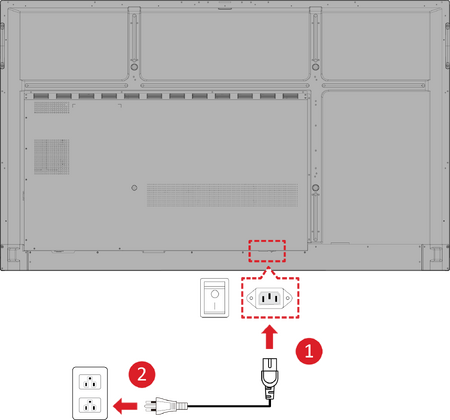
Connecting to Power
- Connect the power cord to the AC IN jack at the rear of the device.
- Plug the power cord plug into a power outlet.
Connecting External Devices and Touch Connection
Your external device(s) can be connected in any of the following configurations:

C Type Connection
To connect via C Type:
- Connect a C Type cable from your external device to the C Type port on the ViewBoard.
HDMI Connection
To connect via HDMI:
- Connect an HDMI cable from your external device to the HDMI 1/2/3 port on the ViewBoard.
- Connect a USB cable to the external device from the appropriate TOUCH port of the ViewBoard.
Note:
- The TOUCH 1 port is for the HDMI 1 and VGA' ports.
- The TOUCH 2 port is for the HDMI 2 and HDMI 3 ports.
VGA Connection
To connect via VGA:
- Connect a VGA cable from your external device to the VGA port on the ViewBoard.
- Connect a USB cable to the external device from the TOUCH 2 port of the ViewBoard.
Note:- The TOUCH 1 port is for the HDMI 1 and VGA ports.
- The TOUCH 2 port is for he HDMI 2 and HDMI 3 ports.
RS-232 Connection
When you use a RS-232 serial port cable to connect your display to an external computer certain functions can be controlled remotely by the PC, including Power ON/OFF, Volume adjustment, Input select, Brightness, and more.

USB and Networking Connections
Just like any PC, it is easy to connect various USB devices and other peripherals to your ViewBoard.
USB Peripherals
Plug the USB device cable into a USB port.

Networking and Modem cables
Plug the network cable into a LAN port.

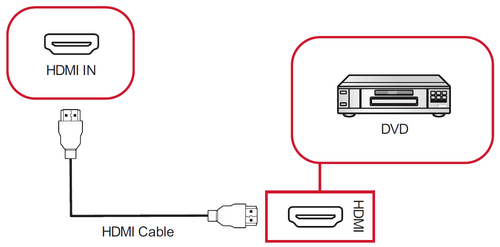
Media Player Connection
To connect a media player:
- Connect the HDMI cable to a HDMI port on your ViewBoard and peripheral device.
- Plug in the power cord of your ViewBoard, and turn on the power supply switch.
- Press the Power button on the ViewBoard to turn the screen on.
-
Press the INPUT button on the remote control and switch to the “HDMI” input source.
Audio Connection
The ViewBoard supports Audio In, Audio Out, and SPDIF.
Audio In
To play audio from your external device through the ViewBoard’s speakers, connect one end of an audio cable to your external device, and the other end to the ViewBoard’s AUDIO IN port.

Audio Out
To play audio from the ViewBoard through an external speaker, connect one end of an audio cable to the external speaker, and the other end to the ViewBoard’s AUDIO OUT port.

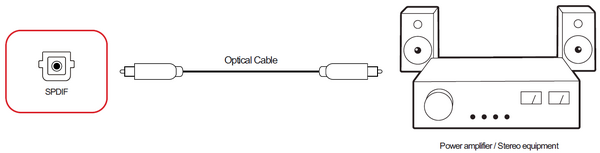
SPDIF Connection
To connect to an external sound system:
- Connect an optical cable from the SPDIF port to your sound system’s optical connector.
- Plug in the power cord of your ViewBoard, and turn on the power supply switch.
- Press the Power button on the ViewBoard to turn the screen on.
Optional Connections
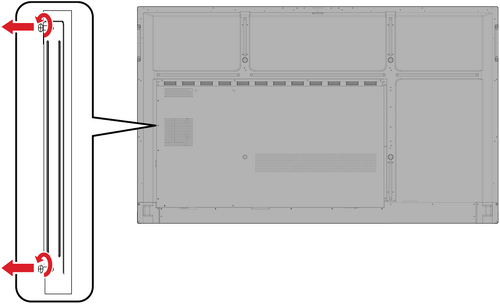
The ViewBoard comes with an OPS Slot for optional add-ons such as a slot-in PC (e.g., VPC-25-O).
- Remove the OPS Slot cover of the display.
- Carefully insert the slot-in PC into the OPS Slot of the display.
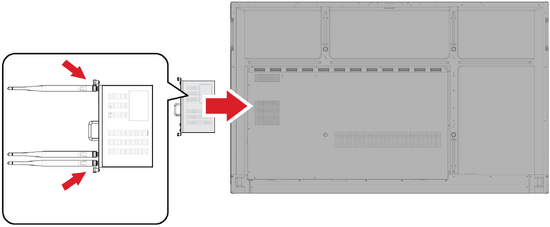
- Secure the slot-in PC to the display.
Powering ON/OFF your ViewBoard
-
Ensure the power cord is connected, plugged into a power outlet, and the Power Switch is in the “ON” position.
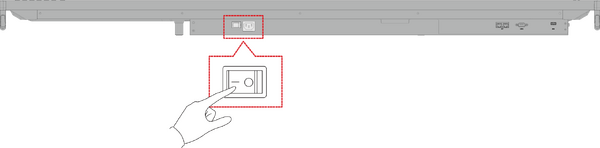 Note: The AC Power input and Power Switch are located at the bottom of the display.
 -
Press the Power button to turn ON the ViewBoard.
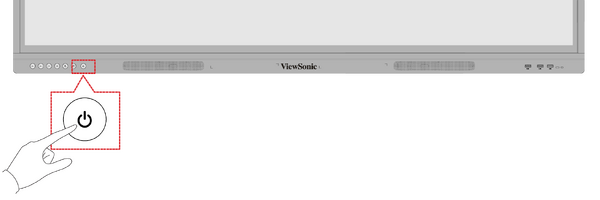
- To turn the ViewBoard OFF, press and hold the Power button.
On-Screen Display (OSD) Menu Tree
| Sub-menu | Menu Option | ||
|---|---|---|---|
| VGA | |||
| HDMI 1 | |||
| HDMI 2 | |||
| HDMI 3 | |||
| PC | |||
| Type-C | |||
| Sub-menu | Menu Option | ||
|---|---|---|---|
| Off | |||
| Except PC (OPS) | |||
| No Signal Input Only | |||
| Black Board Mode
(Auto Signal Detection: Off) | |||
| Sub-menu | Menu Option | ||
|---|---|---|---|
| Picture Mode | Normal | ||
| Dynamic | |||
| Soft | |||
| User | |||
| Contrast | (-/+, 0~100) | ||
| Brightness | (-/+, 0~100) | ||
| Color | (-/+, 0~100) | ||
| Tint | (-/+, 0~100) | ||
| Sharpness | (-/+, 0~100) | ||
| Color Temperature | Warm (7500K) | ||
| Normal (9300K) | |||
| Cool (10000K) | |||
| User | |||
| Noise Reduction | Off | ||
| Low | |||
| Medium | |||
| High | |||
| Overscan | off | ||
| On | |||
| RGB Range | Full Range | ||
| Limited Range | |||
| Auto | |||
| Flicker Free | Off | ||
| On | |||
| Blue Light Filter | (-/+, 0~100) | ||
| Gamma Set | Native | ||
| 2.2 | |||
| 2.4 | |||
| Backlight | (-/+, 0~100) | ||
| Picture Reset | Cancel | ||
| Reset | |||
| Sub-menu | Menu Option | ||
|---|---|---|---|
| Volume Control | Speaker | ||
| Audio Out | |||
| Sync | |||
| Treble | (-/+, 0~100) | ||
| Bass | (-/+, 0~100) | ||
| Balance | (-/+, 0~100) | ||
| Volume | (-/+, 0~100) | ||
| Maximum Volume | (-/+, 0~100) | ||
| Minimum Volume | (-/+, 0~100) | ||
| Mute | Off | ||
| On | |||
| Audio Out Sync | Enable | ||
| Disable | |||
| Audio Out Volume
(Line Out) |
(-/+, 0~100) | ||
| Audio Reset | Cancel | ||
| Reset | |||
| Sub-menu | Menu Option | ||
|---|---|---|---|
| Off Time | Off | ||
| 1 hour~24 hours | |||
| Date and Time | Set Date | ||
| Set Time | |||
| Choose Time Zone | |||
| Use 24-hour Format | |||
| Schedule | Schedule List | ||
| Enable | |||
| Start Time | |||
| End Time | |||
| Input | HDMI 1 | ||
| HDMI 2 | |||
| HDMI 3 | |||
| PC | |||
| Type-C | |||
| VGA | |||
| Dat of the Week | |||
| Every Week | |||
| OSD Turn Off | Off | ||
| 5/15/30/60 seconds | |||
| Input Information | Off | ||
| 5/10/20/30/60 seconds | |||
| Automatic Date & Time | Off | ||
| On | |||
| Time Reset | Cancel | ||
| Reset | |||
| Sub-menu | Menu Option | ||
|---|---|---|---|
| Display Information | Model Name | ||
| Serial No. | |||
| Operation Hours | |||
| SW Version | |||
| Sub-menu | Menu Option | ||
|---|---|---|---|
| Saving | Panel Saving | Brightness | Off |
| On | |||
| Power Save | Mode 1 | ||
| Mode 2 | |||
| Mode 3 | |||
| Mode 4 | |||
| Power LED Light | Off | ||
| On | |||
| Boot | Boot On Source | HDMI 1 | |
| HDMI 2 | |||
| HDMI 3 | |||
| PC | |||
| Type-C | |||
| VGA | |||
| Boot On Logo | Off | ||
| On | |||
| Signal | Auto Signal Detection | Off | |
| On | |||
| No Signal Standby | off | ||
| 0 mins | |||
| 5 mins | |||
| 15 mins | |||
| 30 mins | |||
| Port | HDMI with One Wire | Off
(default) | |
| On | |||
| USB Cloning | Import | ||
| Export | |||
| USB Auto Play | Off | ||
| On | |||
| Others | Switch On State | Power Off | |
| Forced On | |||
| Last Status | |||
| WOL | Off | ||
| On | |||
| Monitor ID 1~98 | |||
| OSD Language | |||
| Factory Reset | Cancel | ||
| Reset | |||
| Advanced Option Reset | Cancel | ||
| Reset | |||
| Sub-menu | Menu Option | ||
|---|---|---|---|
| Energy Start | Off | ||
| On | |||
| Light Sensor | Off | ||
| On | |||
| IP | |||
| Port | |||
| Sub-menu | Menu Option | ||
|---|---|---|---|
| Leave OSD Menu | |||
On-Screen Display (OSD) Menu Operation
Access VGA, Input Source, WriteAway, Picture, Audio, Time, About, Advanced Options, and Other Settings settings through the OSD Menu.

Open the OSD Menu by pressing MENU on the remote control or the Menu button on the front Control Panel.
VGA
NOTE: For VGA input source only.
| Item | Description |
|---|---|
| H Position | Adjust the screen image position horizontally. |
| V Position | Adjust the screen image position vertically. |
| Clock | Adjust the frequency of the pixel clock signal. This will affect the resolution and refresh rate. |
| Clock Phase | Adjust the clock phase to improve the display’s clarity and avoid flickering. |
| Zoom Mode | Select the aspect ratio of the display. |
| Auto Adjust | Automatically adjust the position of the screen image. |
| Screen Reset | Reset the Screen settings to their default settings. |
Input Source
Select one of the available input sources.

WriteAway

| Item | Description |
|---|---|
| Off | Turn off the WriteAway function. |
| Except PC (OPS) | Can be used for all channels, except OPS. |
| No Signal Input Only | Can be used when there is no signal input. |
| Black Board Mode
(Auto Signal Detection: Off) |
Can be used when there is no signal input; auto-detection will be disabled. |
Picture

| Item | Description | ||||||||||
|---|---|---|---|---|---|---|---|---|---|---|---|
| Picture Mode | Select a predefined picture setting.
| ||||||||||
| Contrast | Adjusts the difference between the image background (black level) and the foreground (white level). Use this to set the peak white level after you have previously adjusted the Brightness setting to suit your selected input and viewing environment. | ||||||||||
| Brightness | Adjusts background black levels of the screen image. The higher the value, the brighter the image. Lower values will result in a darker image. | ||||||||||
| Color | Adjust an image from black and white to fully saturated color. | ||||||||||
| Tint | The higher the value, the more greenish the picture becomes. The lower the value, the more reddish the picture becomes. | ||||||||||
| Sharpness | A high value results in a sharper picture; a low value softens the picture. | ||||||||||
| Color Temperature | Adjust the color temperature value.
| ||||||||||
| Noise Reduction | Reduce image noise and distortion. | ||||||||||
| Overscan | Automatically enlarge the original picture horizontally and vertically to an equal aspect ratio that fills the screen. | ||||||||||
| RGB Range | Manually change the color format options to fit the correct color format range if the colors are not displayed correctly. | ||||||||||
| Flicker Free | Reduce or eliminate screen flicker. | ||||||||||
| Blue Light Filter | Adjust the filter that blocks high-energy blue light for a more comfortable viewing experience. | ||||||||||
| Gamma Set | Reflect the relationship between input source and picture brightness. | ||||||||||
| Backlight | Adjust the backlight value. | ||||||||||
| Picture Reset | Reset the Picture settings to their default settings. |
Audio

| Item | Description | ||||||||
|---|---|---|---|---|---|---|---|---|---|
| Volume Control | Select which component has sound and controls the volume.
| ||||||||
| Treble | Increase or decrease the treble level (higher-pitched sounds). | ||||||||
| Bass | Increase or decrease the bass level (lower-pitched sounds). | ||||||||
| Balance | Adjust the left/right speaker balance. | ||||||||
| Volume | Increase or decrease the display’s volume level. | ||||||||
| Maximum Volume | Set the display’s maximum volume level. | ||||||||
| Minimum Volume | Set the display’s minimum volume level. | ||||||||
| Mute | Toggle mute on or off. | ||||||||
| Audio Out Sync | Sync the Audio Out Volume (Line Out) with the display’s speakers. | ||||||||
| Audio Out Volume
(Line Out) |
Increase or decrease the Audio Out volume level. | ||||||||
| Audio Reset | Reset the Audio settings to their default settings. |
Time

| Item | Description |
|---|---|
| Off Time | Set a time for the ViewBoard to automatically power off. |
| Date and Time | Set the ViewBoard’s system time and format. |
| Schedule | Set up to seven different time intervals for the display to be active. |
| OSD Turn Off | Set the length of time the OSD Menu remains on screen. |
| Input Information | Set the length of time the input information will be displayed on the display. |
| Automatic Date & Time | Automatically set the date and time. |
| Time Reset | Reset the Time settings to their default settings. |
About

| Item | Description |
|---|---|
| Display Information | See information about the display: Model Name, Serial No., Operation Hours, and Software Version. |
Advanced Options

| Item | Description | ||||||||||
|---|---|---|---|---|---|---|---|---|---|---|---|
| Saving | Panel Saving
When enabled, the ViewBoard display’s brightness will be limited to 40% of its maximum brightness level. Power Save Select one of the power saving modes to enable power saving.
Power LED Light Turn on/off the ViewBoard’s power indicator light. | ||||||||||
| Boot | Boot On Source
Select which input source to use when the Viewboard is powered on. Boot On Logo Select a boot up logo to display when the ViewBoard is starting. | ||||||||||
| Signal | Auto Signal Detection
Enable to automatically detect input sources and display them. No Signal Standby Enable to go to standby mode when there is no input source detected. | ||||||||||
| Port | HDMI with One Wire
When ON, HDMI CEC will be enabled. HDMI CEC synchronizes device power on/off operation via HDMI connection. USB Cloning Import/export OSD Settings to a USB storage device. USB Auto Play When on, the ViewBoard will copy media files from an external storage device (e.g., USB drive) to internal storage, then play the media files automatically. | ||||||||||
| Others | Switch On State
Select the display status for the next time the power cord is connected to a power outlet.
WOL (Wake On LAN) When on, the ViewBoard will turn ON automatically after plugging in a LAN cable when the screen is off. Monitor ID Assign a number to remote control the display by RS-232. NOTE: The number range is: 1~98; 99 is reserved for “All Displays”. OSD Language Set the preferred language for the ViewBoard. Factory Reset Reset all OSD Menu settings to their default settings. Advanced Options Reset Reset the Advanced Options settings to their default settings. |
Other Settings

| Item | Description |
|---|---|
| Energy Star | Toggle Energy Star on or off. |
| Light Sensor | Toggle the light sensor on or off. |
| IP | View the current IP address. |
| Port | View the current port number. |
Leave OSD Menu
Exit the OSD Menu.

Low Blue Light Filter and Eye Health
The Blue Light Filter blocks high-energy blue light for a more comfortable viewing experience.

Calculating Breaks
When viewing screens for extended periods, it is recommended to take periodic breaks from viewing. Short breaks of at least 10 minutes are recommended after one (1) hour of continuous viewing.
Taking shorter, more frequent breaks are generally more beneficial than longer, less frequent breaks.
Focus Fatigue (20-20-20 Rule)
To reduce the risk of eye fatigue by constantly looking at the screen, look away from the screen at least every 20 minutes and gaze at a distant object (at least 20 feet away) for at least 20 seconds.
Looking at Distant Objects
While taking breaks, users can further reduce eye strain and dryness by focusing on objects that are further away from them for 10-15 seconds, then gaze at something up close for 10-15 seconds. Repeat this up to 10 times. This exercise reduces the risk of your eyes’ focusing ability to “lock up” after prolonged computer work.
Eye and Neck Exercises
Eye Exercises
Eye exercises can help minimize eye strain. Slowly roll your eyes to the left, right, up, and down. Repeat as many times as needed.

Neck Exercises
Neck exercises can also help minimize eye strain. Relax your arms and let them hang at your sides, bend forward slightly to stretch the neck, turn your head to the right and to the left. Repeat as many times as needed.
RS-232
This document describes the hardware interface spec and software protocols of RS-232 interface communication between ViewSonic LFD and PC or other control units with RS-232 protocol.
The protocol contains three command sections:
- Set-Function
- Get-Function
- Remote control pass-through mode
Note: Below, “PC” represents all the control units that can send or receive the RS-232 protocol command.
Description
RS-232 Hardware Specification
ViewSonic LFD communication port on the rear side:
- Connector type: DSUB 9-Pin Male (female or 3.5 mm barrel connector)
- Use of crossover (null modem) cable for connection
- Pin Assignment:
| Pin # | Signal | Remark | |
|---|---|---|---|
| Male DSUB 9-Pin (preferred) | 1 | NC | |
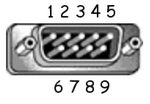 |
2 | RXD | Input to Display |
| 3 | TXD | Output to Display | |
| 4 | NC | ||
| 5 | GND | ||
| Female DSUB 9-Pin | 6 | NC | |
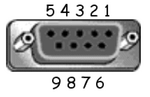 |
7 | NC | |
| 8 | NC | ||
| 9 | NC | ||
| frame | GND |
| Item | Signal | Remark | |
|---|---|---|---|
| 3.5 mm barrel connector (alternative for limited space) |
Tip | TXD | Output from Display |
 |
Ring | RXD | Input to Display |
| Sleeve | GND |
LAN Hardware Specification
ViewSonic LFD communication port on the rear side:
- Connector type: 8P8C RJ45
- Pin assignment:
| Pin # | Signal | Remark | |
|---|---|---|---|
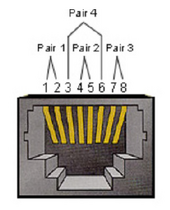 |
1 | TX+ | Output from Display |
| 2 | TX- | Output from Display | |
| 3 | RX+ | Input to Display | |
| 4 | BI_D3+ | For 1G case | |
| 5 | BI_D3- | For 1G case | |
| 6 | RX- | Input to Display | |
| 7 | BI_D4+ | For 1G case | |
| 8 | BI_D4- | For 1G case | |
| frame | GND |
RS-232 Communication Setting
- Baud Rate Select: 9600bps (fixed)
- Data bits: 8 bits (fixed)
- Parity: None (fixed)
- Stop Bits: 1(fixed)
LAN Communication Setting
- Type: Ethernet
- Protocol: TCP/IP
- Port: 7142
- WOL Port: 9 (fixed) for UDP
- Cross subnet: No
- Logon Credentials: No
Command Message Reference
PC sends to LFD command packet followed by “CR”. Every time PC sends control command to Display, the Display shall respond as follows:
- If the message is received correctly it will send “+” (02Bh) followed by “CR” (00Dh)
- If the message is received incorrectly it will send “-” (02Dh) followed by “CR” (00Dh)
Specifications
| Item | Category | Specifications |
|---|---|---|
| Model | P/N | IFP55G1 |
| No. | VS19763 | |
| Screen | Size | 55" |
| Display Area
(mm) |
1209.6 (H) x 680.4 (V) | |
| Surface Treatment | Anti-Glare (Haze 25%), Hard Coating (3H) | |
| Brightness | 350 nits (Typical) | |
| Native Resolution | 3840 x 2160 (UHD) | |
| Touch Point | Windows OS: 40 points; Android: 20 points | |
| Input Signal |
| |
| Output Signal |
| |
| Network | LAN |
|
| PC Slot | 1 x 80-pin OPS | |
| Speaker Output | 2 x 10W Speaker | |
| RS-232 | RS-232 Communication | |
| Power | Voltage | 100V-240V AC 50/60Hz |
| Operating Conditons | Temperature | 0° C to 40° C
(32° F to 104° F) |
| Humidity | 20% to 80% (non-condensing) | |
| Altitude | ≤ 5,000 m | |
| Storage Conditions | Temperature | -20° C to 60° C
(-4° F to 140° F) |
| Humidity | 10% to 80% (non-condensing) | |
| Altitude | ≤ 5,000 m | |
| Dimensions | Physical
(W x H x D) |
1262.5 mm x 770 mm x 85.7 mm
(49.7” x 30.3” x 3.37”) |
| Weight | Physical | 26.90 kg
(59.30 lbs) |
| Power Consumption | On
(Energy Star) |
90.23W |
| Off | ≤ 0.5W |
Note: Product specifications are subject to change without notice.
Display Timing Modes
HDMI
| Resolution | Refresh Rate (@) |
|---|---|
| 640 x 480 | 60 Hz |
| 720 x 400 | 70 Hz |
| 800 x 600 | 56, 60 Hz |
| 1024 x 768 | 60 Hz |
| 1280 x 768 | 60 Hz |
| 1280 x 800 | 60 Hz |
| 1280 x 960 | 60 Hz |
| 1280 x 1024 | 60 Hz |
| 1360 x 768 | 60 Hz |
| 1440 x 900 | 60 Hz |
| 1680 x 1050 | 60 Hz |
| 1920 x 1080 | 60 Hz |
| 3840 x 2160 | 24, 25, 30, 50, 60 Hz |
USB C Type
| Resolution | Refresh Rate (@) |
|---|---|
| 640 x 480 | 60 Hz |
| 720 x 400 | 70 Hz |
| 800 x 600 | 56, 60 Hz |
| 1024 x 768 | 60 Hz |
| 1280 x 768 | 60 Hz |
| 1280 x 800 | 60 Hz |
| 1280 x 960 | 60 Hz |
| 1280 x 1024 | 60 Hz |
| 1360 x 768 | 60 Hz |
| 1440 x 900 | 60 Hz |
| 1680 x 1050 | 60 Hz |
| 1920 x 1080 | 60 Hz |
| 3840 x 2160 | 24, 25, 30, 50, 60 Hz |
VGA
| Resolution | Refresh Rate (@) |
|---|---|
| 640 x 480 | 60 Hz |
| 800 x 600 | 56, 60 Hz |
| 1024 x 768 | 60 Hz |
| 1280 x 768 | 60 Hz |
| 1280 x 800 | 60 Hz |
| 1280 x 960 | 60 Hz |
| 1280 x 1024 | 60 Hz |
| 1360 x 768 | 60 Hz |
| 1680 x 1050 | 60 Hz |
| 1920 x 1080 | 60 Hz |
Compliance Information
This section addresses all connected requirements and statements regarding regulations. Confirmed corresponding applications shall refer to nameplate labels and relevant markings on the unit.
FCC Compliant Statement
This device complies with part 15 of FCC Rules. Operation is subject to the following two conditions: (1) this device may not cause harmful interference, and (2) this device must accept any interference received, including interference that may cause undesired operation. This equipment has been tested and found to comply with the limits for a Class B digital device, pursuant to part 15 of the FCC Rules.
These limits are designed to provide reasonable protection against harmful interference in a residential installation. This equipment generates, uses, and can radiate radio frequency energy, and if not installed and used in accordance with the instructions, may cause harmful interference to radio communications. However, there is no guarantee that interference will not occur in a particular installation. If this equipment does cause harmful interference to radio or television reception, which can be determined by turning the equipment off and on, the user is encouraged to try to correct the interference by one or more of the following measures:
- Reorient or relocate the receiving antenna.
- Increase the separation between the equipment and receiver.
- Connect the equipment into an outlet on a circuit different from that to which the receiver is connected.
- Consult the dealer or an experienced radio/TV technician for help.
Warning: You are cautioned that changes or modifications not expressly approved by the party responsible for compliance could void your authority to operate the equipment.
Industry Canada Statement
CAN ICES(B) / NMB(B)
CE Conformity for European Countries

The device complies with the EMC Directive 2014/30/EU and Low Voltage Directive 2014/35/EU.
The following information is only for EU-member states:
The mark shown to the right is in compliance with the Waste Electrical and Electronic Equipment Directive 2012/19/EU (WEEE). The mark indicates the requirement NOT to dispose of the equipment as unsorted municipal waste, but use the return and collection systems according to local law.

Declaration of RoHS2 Compliance
This product has been designed and manufactured in compliance with Directive 2011/65/EU of the European Parliament and the Council on restriction of the use of certain hazardous substances in electrical and electronic equipment (RoHS2 Directive) and is deemed to comply with the maximum concentration values issued by the European Technical Adaptation Committee (TAC) as shown below.
| Substance | Proposed Maximum Concentration | Actual Concentration |
|---|---|---|
| Lead (Pb) | 0.1% | < 0.1% |
| Mercury (Hg) | 0.1% | < 0.1% |
| Cadmium (Cd) | 0.01% | < 0.01% |
| Hexavalent Chromium (Cr6⁺) | 0.1% | < 0.1% |
| Polybrominated biphenyls (PBB) | 0.1% | < 0.1% |
| Polybrominated diphenyl ethers (PBDE) | 0.1% | < 0.1% |
| Bis (2-ethylhexyl) phthalate (DEHP) | 0.1% | < 0.1% |
| Butyl benzyl phthalate (BBP) | 0.1% | < 0.1% |
| Dibutyl phthalate (DBP) | 0.1% | < 0.1% |
| Diisobutyl phthalate (DIBP) | 0.1% | < 0.1% |
Certain components of products as stated above are exempted under the Annex III of the RoHS2 Directives as noted below. Examples of exempted components are:
- Copper alloy containing up to 4% lead by weight.
- Lead in high melting temperature type solders (i.e. lead-based alloys containing 85% by weight or more lead).
- Electrical and electronic components containing lead in a glass or ceramic other than dielectric ceramic in capacitors, e.g. piezoelectronic devices, or in a glass or ceramic matrix compound.
- Lead in dielectric ceramic in capacitors for a rated voltage of 125 V AC or 250 V DC or higher.
ENERGY STAR® Statement
ENERGY STAR® is a U.S. Environmental Protection Agency voluntary program that helps businesses and individuals save money and protect our climate through superior energy efficiency. Products that earn the ENERGY STAR® prevent greenhouse gas emissions by meeting strict energy efficiency criteria or requirements set by the U.S. Environmental Protection Agency.
As an ENERGY STAR® Partner, ViewSonic is determined to meet the ENERGY STAR® Guidelines and mark all certified models with the ENERGY STAR® logo.
The following logo appears on all ENERGY STAR®-certified models:

Note: The power management features significantly reduce energy consumption when the product is not in use. Power management allows the device to automatically enter a low power “sleep” mode after a defined period of inactivity. And the power management features also enter Sleep Mode or Off Mode within 5 minutes of being disconnected from a host computer. Please note any change in energy settings will increase energy consumption.
Indian Restriction of Hazardous Substances
Restriction on Hazardous Substances statement (India). This product complies with the “India E-waste Rule 2011” and prohibits use of lead, mercury, hexavalent chromium, polybrominated biphenyls or polybrominated diphenyl ethers in concentrations exceeding 0.1 weight % and 0.01 weight % for cadmium, except for the exemptions set in Schedule 2 of the Rule.
Indian Restriction of Hazardous Substances
Restriction on Hazardous Substances statement (India). This product complies with the “India E-waste Rule 2011” and prohibits use of lead, mercury, hexavalent chromium, polybrominated biphenyls or polybrominated diphenyl ethers in concentrations exceeding 0.1 weight % and 0.01 weight % for cadmium, except for the exemptions set in Schedule 2 of the Rule.
Product Disposal at End of Product Life
ViewSonic® respects the environment and is committed to working and living green. Thank you for being part of Smarter, Greener Computing. Please visit the ViewSonic® website to learn more.
USA & Canada:
https://www.viewsonic.com/us/go-green-with-viewsonic
Europe:
https://www.viewsonic.com/eu/environmental-social-governance/recycle
Taiwan:
https://recycle.moenv.gov.tw/
For EU users, please contact us for any safety/accident issue experienced with this product:
 |
ViewSonic Europe Limited Flevolaan 38, 1382JZ, Weesp the Netherlands |
 |
+31 08000232999 |
 |
EPREL@viewsoniceurope.com |
 |
https://www.viewsonic.com/eu/ |
Copyright Information
Copyright© ViewSonic® Corporation, 2024. All rights reserved.
Macintosh and Power Macintosh are registered trademarks of Apple Inc.
Microsoft, Windows, and the Windows logo are registered trademarks of Microsoft Corporation in the United States and other countries.
ViewSonic® and the three birds logo are registered trademarks of ViewSonic® Corporation.
VESA is a registered trademark of the Video Electronics Standards Association. DPMS, DisplayPort, and DDC are trademarks of VESA.
ENERGY STAR® is a registered trademark of the U.S. Environmental Protection Agency (EPA).
As an ENERGY STAR® partner, ViewSonic® Corporation has determined that this product meets the ENERGY STAR® guidelines for energy efficiency.
Disclaimer: ViewSonic® Corporation shall not be liable for technical or editorial errors or omissions contained herein; nor for incidental or consequential damages resulting from furnishing this material, or the performance or use of this product.
In the interest of continuing product improvement, ViewSonic® Corporation reserves the right to change product specifications without notice. Information in this document may change without notice.
No part of this document may be copied, reproduced, or transmitted by any means, for any purpose without prior written permission from ViewSonic® Corporation.
IFPG1_UG_ENG_1b_20240417