IFP6552-2
Package Contents
- NOTE: The power cord and video cables included in your package may vary depending on your country. Please contact your local reseller for more information.
|
 |
Wall Mount Kit Specifications (VESA)
Please follow the instructions in the wall mount installation guide to install your wall mount or mobile mount bracket. If attaching to other building materials, please contact your nearest dealer.

| Model | VESA Spec. (A x B) |
Standard Screw (C x D) |
Screw Quantity |
|---|---|---|---|
| IFP6552-2 | 500 x 400 mm | M8 x 25 mm | 4 |
- Do not use screws that are longer than the standard dimension, as they may cause damage to the inside of the display.
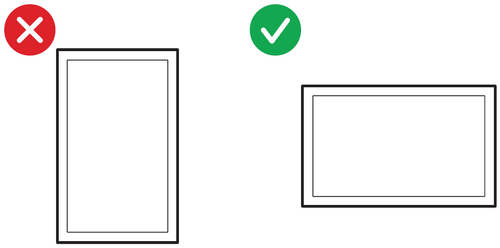
- Only mount the display in landscape orientation. Never mount in a portrait orientation.
Product Overview
Front Panel

Rear Panel

Control Panel

| Number | Description |
|---|---|
| 1 | Ambient light sensor |
| 2 | Remote control receiver |
| 3 |
|
| 4 | Return to the ViewBoard's main interface |
| 5 | Return to the ViewBoard's previous level |
| 6 | Disable/Enable the touch screen |
| 7 | Freeze the current image on the screen |
| 8 | Decrease the volume level |
| 9 | Increase the volume level |
I/O Panels

Front I/O

| Number | Port | Description |
|---|---|---|
| 1 | Type C (Type C 2) |
|
| 2 | HDMI (HDMI 3) |
|
| 3 | TOUCH (TOUCH 3) |
|
| 4 | USB |
|
Rear I/O

| Number | Port | Description |
|---|---|---|
| 1 | VGA | External computer video input |
| 2 | AUDIO IN | External computer audio input |
| 3 | TOUCH 2 |
|
| 4 | USB |
|
| 5 | RS232 | Serial interface; used for mutual transfer of data between devices |
| 6 | AUDIO OUT | Audio output to an external speaker/headset |
| 7 | SPDIF | Multichannel sound via optical signals. |
| 8 | LAN | Standard RJ45 (10M/100M/1000M) Internet connection interface. Features hub support for network sharing. |
| 9 | USB |
|
Side I/O

| Number | Port | Description |
|---|---|---|
| 1 | USB |
|
| 2 | Type C (Type C 1) |
|
| 3 | HDMI OUT | Connect to devices with HDMI input function. Supports 1080p and 4K@60Hz.
|
| 4 | TOUCH 1 |
|
| 5 | HDMI 1 |
|
| 6 | HDMI 2 |
|
| 7 | DP |
|
Remote Control Overview

| Number | Description |
|---|---|
| 1 | Power ON/OFF |
| 2 | Screen capture |
| 3 | Startup writing |
| 4 | Back to the ViewBoard input Home Screen |
| 5 | Back/Return to the previous page |
| 6 | Increase/Decrease the Volume |
| 7 | Number Keypad |
| 8 | Information |
| 9 | Input source selection |
| 10 | Media control buttons:
|
| 11 | Settings menu |
| 12 | Up/Down/Right/Left/OK |
| 13 | Freeze screen |
| 14 | Mute/Unmute |
| 15 | Increase/Decrease Brightness |
| 16 | Blank Screen |
| 17 | Adjust Aspect Ratio |
Remote Control Effective Range
The working range of the remote control is shown here. It has an effective range of 8 meters, 30° degrees left and right. Ensure there is nothing obstructing the remote control’s signal to the receiver.

Replacing the Batteries of the Remote Control
- Remove the cover on the rear of the remote control.
- Insert two “AAA” batteries, ensuring the “+” symbol on the battery matches the “+” on the battery post.
- Replace the cover by aligning it with the slot on the remote control and snapping the latch shut.

- WARNING: There is a risk of combustion if the batteries are replaced with the incorrect type.
- NOTE:
- It is recommended that you do not mix battery types.
- Always dispose of old batteries in an environmentally friendly way. Contact your local government for more information on how to dispose of batteries safely.
- NOTE:
Using Gestures
Touch gestures allow the user to use pre-determined commands without using a keyboard or mouse. Using gestures on the ViewBoard, the user can select/deselect objects, change the location of an object, access settings, erase digital ink, and much more.
- NOTE: Gesture availability will vary based on the application.
| Select and Deselect an Object (Clicking) Press and release the ViewBoard to select/deselect options or objects. This is like a single, standard left mouse click. |
 |
| Display Menu Options (Right-Clicking) Press and hold the ViewBoard with your finger. This is like a single, standard right mouse click. |
 |
| Double-Clicking Quickly press and release twice in the same location on the ViewBoard. This is like a double, standard left mouse click. |
 |
| Moving an Object Press and hold the object on the ViewBoard and slowly drag it with your finger to your desired location. |
 |
| Erasing Digital Ink Use your flattened hand, palm, or fist on the ViewBoard and move your hand across the area which you wish to erase. |
 |
| Swipe Up for General Settings Swipe up from the bottom of the ViewBoard to launch the General Settings. |
 |
Connecting to Power

- Connect the power cord to the AC IN jack at the rear of the device.
- Plug the power cord plug into a power outlet.
Connecting External Devices and Touch Connection

USB Type C Connection
To connect via Type C: Connect a Type C cable from your external device to a Type C port on the ViewBoard.
HDMI Connection
To connect via HDMI:
- Connect an HDMI cable from your external device to the HDMI 1/2/3 port on the ViewBoard.
- Connect a USB Type B to A to the external device from the appropriate TOUCH port of the ViewBoard.
- NOTE: The TOUCH 1 port is for the HDMI 1 and DP ports. The TOUCH 2 port is for the HDMI 2 and VGA ports. The TOUCH 3 port is for the HDMI 3 port.
DisplayPort Connection
To connect via DisplayPort:
- Connect a DisplayPort cable from your external device to the DP port on the ViewBoard.
- Connect a USB Type B to A cable to the external device from the TOUCH 1 port of the ViewBoard.
- NOTE: The TOUCH 1 port is for the HDMI 1 and DP ports. The TOUCH 2 port is for the HDMI 2 and VGA ports. The TOUCH 3 port is for the HDMI 3 port.
VGA Connection
To connect via VGA:
- Connect a VGA cable from your external device to the VGA port on the ViewBoard.
- Connect a USB Type B to A to the external device from the TOUCH 2 port of the ViewBoard.
- NOTE: The TOUCH 1 port is for the HDMI 1 and DP ports. The TOUCH 2 port is for the HDMI 2 and VGA ports. The TOUCH 3 port is for the HDMI 3 port.
RS-232 Connection

When you use a RS-232 serial port cable to connect your display to an external computer certain functions can be controlled remotely by the PC, including Power ON/OFF, Volume adjustment, Input select, Brightness, and more.
USB and Networking Connections
Just like any PC, it is easy to connect various USB devices and other peripherals to your ViewBoard.
USB Peripherals

Plug the USB device cable into the USB port.
Networking and Modem cables

Plug the network cable into a LAN port.
Media Player Connection

To connect a media player:
- Connect the HDMI cable to the HDMI IN port on your ViewBoard and peripheral device.
- Plug in the power cord of your ViewBoard, and turn on the power supply switch.
- Press the Power button on the ViewBoard to turn the screen on.
- Press the INPUT button on the remote control and switch to the “HDMI” input source.
Audio Connection
The ViewBoard supports Audio In, Audio Out, and SPDIF.
Audio In
To play audio from your external device through the ViewBoard’s speakers, connect one end of an audio cable to your external device, and the other end to the ViewBoard’s AUDIO IN port.

Audio Out
To play audio from the ViewBoard through an external speaker, connect one end of an audio cable to the external speaker, and the other end to the ViewBoard’s AUDIO OUT port.

SPDIF Connection

To connect to an external sound system:
- Connect an optical cable from the SPDIF port to your sound system’s optical connector.
- Plug in the power cord of your ViewBoard, and turn on the power supply switch.
- Press the Power button on the ViewBoard to turn the screen on.
Video Output Connection

To output video via a display device:
- Connect an HDMI cable to the HDMI IN port of your display device, and the other end to the HDMI OUT port of your ViewBoard.
- Plug in the power cord of your ViewBoard, and turn on the power supply switch.
- Press the Power button on the ViewBoard to turn the screen on.
Optional Connections
The ViewBoard comes with an OPS Slot as well as a Wi-Fi Slot for optional add-ons such as a slot-in PC (e.g., VPC-25-O) or Wi-Fi card (e.g., VB-WIFI-001).
Slot-in PC (OPS Slot) Installation
- Remove the OPS Slot cover of the display.
- Carefully insert the slot-in PC into the OPS Slot of the display.
- Secure the slot-in PC to the display.


Wi-Fi Card (Wi-Fi Slot) Installation
- Remove the Wi-Fi Slot cover of the display.
- Carefully insert the slot-in Wi-Fi card into the Wi-Fi Slot of the display.
- Secure the slot-in Wi-Fi card to the display.


Powering ON/OFF your ViewBoard
- Ensure the power cord is connected, plugged into a power outlet, and the power switch is in the “ON” position.
- Press the Power button to turn on the ViewBoard.
- To turn the ViewBoard OFF, press and hold the Power button.

Initial Launch Setup
When you first turn ON your ViewBoard, an initial setup wizard will launch.
- Choose your preferred Language.
- Adjust accessibility features as needed.
- Setup and connect to a network.
- Set and adjust the Date and Time as needed.
- Copy your apps and data from another device to the ViewBoard or tap Don’t copy to continue without copying anything.
- Sign in with a Google account, or tap Skip to continue without signing in.
- Accept or decline the Google services.
- Set a PIN to setup a Screen lock, or tap Skip to continue without setting one.
- Go to: Settings > System > Launcher Scheme
- Select either Scheme A or Scheme B.
- Tap a Toolbar trigger icon.
- Tap on your desired application or tool.
- NOTE: Only for the ViewBoard OS source.
- Press INPUT on the remote control or touch the Input Source icon (
 ) of the Toolbar to display the Input Settings menu.
 - Press ▼/▲/◄/► on the remote control to select the input source you want.
- NOTE: The PC source will only be visible when a slot-in computer is installed.
- Press ENTER on the remote control, or touch the input source.
- Press BACK on the remote control, or touch a blank area outside of the menu to exit.
- Press INPUT on the remote control or touch the Input Source icon () of the Toolbar to display the Input Settings menu.
- Touch and drag the brightness slider directly to adjust the backlight value.
- Press BACK on the remote control, or touch a blank area outside of the menu to exit.
- Press INPUT on the remote control or touch the Input Source icon () of the Toolbar to display the Input Settings menu.
- Touch and drag the volume slider directly to adjust the value, or press +/- on the remote control to adjust. Additionally, pressing Mute on the remote control will mute/unmute the volume.
- Press BACK on the remote control, or touch a blank area outside of the menu to exit.
- Press INPUT on the remote control or touch the Input Source icon () of the Toolbar to display the Input Settings menu. Then select the Display tab.
- Press ▼/▲/◄/► on the remote control to select the menu option you want.
- Press ENTER on the remote control to confirm or press ◄/► to adjust the menu option. Additionally, touch/adjust the menu option directly.
- Press BACK on the remote control, or touch a blank area outside of the menu to exit.
- Press INPUT on the remote control or touch the Input Source icon () of the Toolbar to display the Input Settings menu. Then select the Audio tab.
- Press ▼/▲/◄/► on the remote control to select the menu option you want.
- Press ENTER on the remote control to confirm or press ◄/► to adjust the menu option. Additionally, touch/adjust the menu option directly.
- Press BACK on the remote control, or touch a blank area outside of the menu to exit.
- NOTE: The following included application descriptions are not a comprehensive list and will vary by the user.
- Set-Function
- Get-Function
- Remote control pass-through mode
- NOTE: Below, “PC” represents all the control units that can send or receive the RS-232 protocol command.
- Connector type: DSUB 9-Pin Male (female or 3.5 mm barrel connector)
- Use of crossover (null modem) cable for connection
- Pin Assignment:
- Connector type: 8P8C RJ45
- Pin assignment:
- Baud Rate Select: 9600bps (fixed)
- Data bits: 8 bits (fixed)
- Parity: None (fixed)
- Stop Bits: 1(fixed)
- Type: Ethernet
- Protocol: TCP/IP
- Port: 5000 (fixed)
- WOL Port: 9 (fixed) for UDP *3.2.0
- Cross subnet: No
- Logon Credentials: No
- If the message is received correctly it will send “+” (02Bh) followed by “CR” (00Dh)
- If the message is received incorrectly it will send “-” (02Dh) followed by “CR” (00Dh)
- NOTE: When PC applies command to all displays (ID=99), only the #1 set needs to reply by the name of ID=1.
- Power On/Off
- Input Select
- Brightness
- Backlight
- Volume
- Mute On/Off
- Reorient or relocate the receiving antenna.
- Increase the separation between the equipment and receiver.
- Connect the equipment into an outlet on a circuit different from that to which the receiver is connected.
- Consult the dealer or an experienced radio/TV technician for help.
- Copper alloy containing up to 4% lead by weight.
- Lead in high melting temperature type solders (i.e. lead-based alloys containing 85% by weight or more lead).
- Electrical and electronic components containing lead in a glass or ceramic other than dielectric ceramic in capacitors, e.g. piezoelectronic devices, or in a glass or ceramic matrix compound.
- Lead in dielectric ceramic in capacitors for a rated voltage of 125 V AC or 250 V DC or higher.
- Any product on which the serial number has been defaced, modified, or removed.
- Damage, deterioration, or malfunction resulting from:
- Accident, misuse, neglect, fire, water, lightning, or other acts of nature, unauthorized product modification, or failure to follow instructions supplied with the product.
- Repair or attempted repair by anyone not authorized by ViewSonic®.
- Damage to or loss of any programs, data, or removable storage media.
- Normal wear and tear.
- Removal or installation of the product.
- Software or data loss occurring during repair or replacement.
- Any damage of the product due to shipment.
- Causes external to the product, such as electric power fluctuations or failure.
- Use of supplies or parts not meeting ViewSonic’s specifications.
- Failure of owner to perform periodic product maintenance as stated in the User Guide.
- Any other cause which does not relate to a product defect.
- Damage caused by static (non-moving) images displayed for lengthy periods of time (also referred to as image burn-in).
- Software - Any third-party software included with the product or installed by the customer.
- Hardware/Accessories/Parts/Components – Installation of any unauthorized hardware, accessories, consumable parts or components (e.g. Projector Lamps).
- Damage to, or abuse of, the coating on the surface of the display through inappropriate cleaning as described in the product User Guide.
- Removal, installation, and set-up service charges, including wall-mounting of the product.
- For information about receiving service under warranty, contact ViewSonic® Customer Support (Please refer to the “Customer Service” page). You will need to provide your product’s serial number.
- To obtain warranty service, you will be required to provide: (a) the original dated sales slip, (b) your name, (c) your address, (d) a description of the problem, and (e) the serial number of the product.
- Take or ship the product, freight prepaid, in the original container to an authorized ViewSonic® service center or ViewSonic®.
- For additional information or the name of the nearest ViewSonic® service center, contact ViewSonic®.
- Damage to other property caused by any defects in the product, damages based upon inconvenience, loss of use of the product, loss of time, loss of profits, loss of business opportunity, loss of goodwill, interference with business relationships, or other commercial loss, even if advised of the possibility of such damages.
- Any other damages, whether incidental, consequential or otherwise.
- Any claim against the customer by any other party.
- Repair or attempted repair by anyone not authorized by ViewSonic®.
- Any product on which the serial number has been defaced, modified or removed.
- Damage, deterioration, or malfunction resulting from:
- Accident, misuse, neglect, fire, water, lightning, or other acts of nature, unauthorized product modification, unauthorized attempted repair, or failure to follow instructions supplied with the product.
- Causes external to the product, such as electrical power fluctuations or failure.
- Use of supplies or parts not meeting ViewSonic®’s specifications.
- Normal wear and tear.
- Any other cause which does not relate to a product defect.
- Any product exhibiting a condition commonly known as “image burn-in” which results when a static image is displayed on the product for an extended period of time.
- Removal, installation, insurance, and set-up service charges.
- For information about receiving service under warranty, contact ViewSonic® Customer Support (Please refer to the “Customer Service” page). You will need to provide your product’s serial number, so please record the product information in the space provided below on your purchase for your future use. Please retain your receipt of proof of purchase to support your warranty claim.
- To obtain warranty service, you will be required to provide: (a) the original dated sales slip, (b) your name, (c) your address, (d) a description of the problem, and (e) the serial number of the product.
- Take or ship the product, freight prepaid, in the original container to an authorized ViewSonic® service center.
- Round trip transportation costs for in-warranty products will be paid by ViewSonic®.
- Damage to other property caused by any defects in the product, damages based upon inconvenience, loss of use of the product, loss of time, loss of profits, loss of business opportunity, loss of goodwill, interference with business relationships, or other commercial loss, even if advised of the possibility of such damages.
- Any other damages, whether incidental, consequential or otherwise.
- Any claim against the customer by any other party.
- Repair or attempted repair by anyone not authorized by ViewSonic®.
- Keep the remote control or loose batteries away from children and pets.
- Follow the manufacturer’s recommended installation guidelines to ensure safe and optimal operation.
- Do not place any heavy objects on the display or cables.
- Do not place the display in an unstable location. The display may fall, resulting in injury or damage.
- Do not use the display near open flames, sparks, or hot surfaces.
- Do not use the display near water or in humid conditions and avoid exposing it to rain or moisture.
- Do not expose the display to direct sunlight or other sources of sustained heat.
- Always route and manage cables connected to the display to prevent tripping, pulling, or grabbing.
- Place the display in a well-ventilated area. Do not place anything on the display that prevents heat dissipation.
- Do not compress the power cord, particularly at the plug and at the point where it connects to the display.
- Do not use the display if the power cord or plug is damaged.
- The power cord is designed with a grounding prong to ensure safe operation. Do not remove or damage the grounding prong.
- Only use the original power cord and do not use damaged or modified cords.
- Unplug the display when it will be unused for long periods of time.
- When moving the display, handle it with care to avoid damage or injury.
- Only use attachments and accessories specifically designed and approved by the manufacturer to ensure compatibility and safety.
- To ensure the long-term performance and reliability of your display, please follow these handling, mounting, and storage recommendations. Placing the display in a horizontal position can potentially lead to several issues:
- Structural Stress: Horizontal placement can put excessive stress on the display’s frame, potentially causing cracks or distortions along the edges.
- Uneven Weight Distribution: This can warp the screen or cause internal damage over time.
- Heat Dissipation: The design of this display relies on gravity to aid in heat dissipation. Placing it horizontally may restrict airflow and lead to overheating, potentially causing damage.
- LCD Cell Integrity: Modifying the display’s orientation or attempting to disassemble it can damage the sensitive LCD cells, permanently affecting image quality.
- For best results, always mount, handle, transport, and store the display in a vertical position. Failure to do so may void the warranty and reduce the display’s lifespan. Damage resulting from improper handling or modification is not covered under warranty.
- If smoke appears, an abnormal noise, or a strange odor is present, immediately turn the display off and contact your reseller or ViewSonic. It is dangerous to continue using the display.
- Refer all servicing to qualified service personnel.
- Do not disassemble the display. It contains electrical components that can cause shock.
- Take a five-minute break every one to two hours.
- Look away from the screen and gaze at distant objects when taking breaks.
- Do eye and neck exercises.
- Eye exercises: Gently move your eyes to the left, right, up, and down.
- Neck exercises: Gently stretch your neck by leaning forward, turning your head side to side.
- Make sure the monitor is turned off and the power cable is unplugged from the power outlet.
- Never spray or pour any liquid directly onto the screen or case.
- Handle the display with care, as darker-colored models, if scuffed, may show marks more clearly than a lighter-colored model.
- Wipe the screen with a clean, soft, lint-free cloth. This removes dust and other particles.
- If the screen is still not clean, apply a small amount of non-ammonia, non-alcohol based glass cleaner onto a clean, soft, lint-free cloth; then wipe the screen.
- Use a soft, dry cloth.
- If the case is still not clean, apply a small amount of non-ammonia, non-alcohol based, mild non-abrasive detergent onto a clean, soft, lint-free cloth, then wipe the surface.
- ViewSonic® does not recommend the use of any ammonia or alcohol-based cleaners on the display screen or case. Some chemical cleaners have been reported to damage the screen and/or case of the monitor.
- ViewSonic® will not be liable for damage resulting from use of any ammonia or alcohol-based cleaners.


Home Screen (Launcher Scheme)
The IFP52-2 series’ Home Screen layout can be customized by selecting from Scheme A and Scheme B.
 |
 |
| Scheme A | Scheme B |
To change the scheme:

Toolbar
The Toolbar is where applications and tools can be found. Trigger icons are on the edge of the screen for quick access.

To launch an application or tool:

Toolbar Icons
| Icon | Description |
|---|---|
 |
Return to the previous operation screen.
|
 |
Annotate the overlay of any input source with a pen or brush. |
 |
Return to the Home Screen of the ViewBoard OS source. |
 |
Display all embedded applications that are currently open. |
 |
Select and change the input source. |
 |
Quickly view and adjust various frequently used tools, settings, and applications.
 |
 |
Access power options and settings. |
 |
Access the System Settings. |
Control and Notification Panel

| Item | Description | |
|---|---|---|
| 1 | Control Panel | Access frequently used settings and tools.
 |
| 2 | Notification Panel | Receive and manage system and application notifications.
 |
On-Screen Display (OSD) Menu - General Settings
Access Input, Display, Audio and other general settings through the OSD Menu.
 |
 |
 | |
Open the OSD Menu by pressing INPUT on the remote control or touching the Input Source icon () of the Toolbar.

Input Settings
To select an Input Source:
To adjust the brightness:

To adjust the volume:

Display Settings
 |
 |
 |
|
To adjust the display settings:
Display Settings - Menu Options
| Item | Description | ||||||||||
|---|---|---|---|---|---|---|---|---|---|---|---|
| Auto Brightness | Automatic brightness adjustment. Adjusts maximum brightness according to ambient light levels. | ||||||||||
| Energy Saving | Enable to reduce power consumption. | ||||||||||
| Low Blue Light | Adjusts the filter that blocks high-energy blue light for a more comfortable viewing experience. | ||||||||||
| Picture Mode | Select a predefined picture setting.
| ||||||||||
| Scale | Adjust the size of the text, applications, and other on-screen items. | ||||||||||
| Contrast | Adjusts the difference between the image background (black level) and the foreground (white level). Use this to set the peak white level after you have previously adjusted the Brightness setting to suit your selected input and viewing environment. | ||||||||||
| Tone | Adjust the color tone value. | ||||||||||
| Sharpness | A high value results in a sharper picture; a low value softens the picture. | ||||||||||
| Color Temperature Mode | Adjust the color temperature value. | ||||||||||
| VGA Setting
(for VGA input only) |
Adjust the analog picture settings when connected via the VGA port. | ||||||||||
| Advanced Settings |
HDMI Out HDMI Out Resolution |
Audio Settings
 |
 |
To adjust the audio settings:
Audio Settings - Menu Options
| Item | Description | ||||||||||||
|---|---|---|---|---|---|---|---|---|---|---|---|---|---|
| Sound Mode | Select a predefined audio setting.
| ||||||||||||
| Volume | Increase or decrease the display’s volume level. | ||||||||||||
| Bass | Increase or decrease the bass level (lower-pitched sounds). | ||||||||||||
| Treble | Increase or decrease the treble level (higher-pitched sounds). | ||||||||||||
| Balance | Adjust the left/right speaker balance. | ||||||||||||
| Mute | Toggle mute ON or OFF. |
Low Blue Light Filter and Eye Health
The Blue Light Filter blocks high-energy blue light for a more comfortable viewing experience.

Calculating Breaks
When viewing screens for extended periods, it is recommended to take periodic breaks from viewing. Short breaks of at least 10 minutes are recommended after one (1) hour of continuous viewing.
Taking shorter, more frequent breaks are generally more beneficial than longer, less frequent breaks.
Focus Fatigue (20-20-20 Rule)
To reduce the risk of eye fatigue by constantly looking at the screen, look away from the screen at least every 20 minutes and gaze at a distant object (at least 20 feet away) for at least 20 seconds.
Looking at Distant Objects
While taking breaks, users can further reduce eye strain and dryness by focusing on objects that are further away from them for 10-15 seconds, then gaze at something up close for 10-15 seconds. Repeat this up to 10 times. This exercise reduces the risk of your eyes’ focusing ability to “lock up” after prolonged computer work.
Eye and Neck Exercises
Eye Exercises
Eye exercises can help minimize eye strain. Slowly roll your eyes to the left, right, up, and down. Repeat as many times as needed.

Neck Exercises
Neck exercises can also help minimize eye strain. Relax your arms and let them hang at your sides, bend forward slightly to stretch the neck, turn your head to the right and to the left. Repeat as many times as needed.
Applications
Much like any smart phone or tablet you can install several different applications from the installed Google Play Store.

Applications can be accessed from the Toolbar, directly from the Home Screen via shortcuts, or by selecting the All Apps icon ( ).
).
| Icon | Description |
|---|---|
 |
myViewBoard Display
Wirelessly mirror screens to a larger display. |
 |
myViewBoard Manager
Remotely manage multiple installations of ViewSonic devices. |
 |
myViewBoard Whiteboard
A digital whiteboarding application. |
 |
Settings
Access the System Settings. |
 |
vCast
Working with ViewBoard Cast software, receive vCastSender laptop screens (Windows/Mac/Chrome) and mobile (iOS/Android) users’ screens, photos, videos, annotations, and camera(s). |
IFP6552-2 Embedded Player
IFP6552-2 Embedded Applications
RS-232
This document describes the hardware interface spec and software protocols of RS-232 interface communication between ViewSonic LFD and PC or other control units with RS-232 protocol.
The protocol contains three command sections:
Description
RS-232 Hardware Specification
ViewSonic LFD communication port on the rear side:
| Pin # | Signal | Remark | |
|---|---|---|---|
| Male DSUB 9-Pin (preferred) | 1 | NC | |
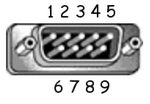 |
2 | RXD | Input to Display |
| 3 | TXD | Output to Display | |
| 4 | NC | ||
| 5 | GND | ||
| Female DSUB 9-Pin | 6 | NC | |
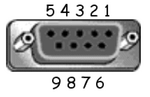 |
7 | NC | |
| 8 | NC | ||
| 9 | NC | ||
| frame | GND |
| Item | Signal | Remark | |
|---|---|---|---|
| 3.5 mm barrel connector (alternative for limited space) |
Tip | TXD | Output from Display |
 |
Ring | RXD | Input to Display |
| Sleeve | GND |
LAN Hardware Specification
ViewSonic LFD communication port on the rear side:
| Pin # | Signal | Remark | |
|---|---|---|---|
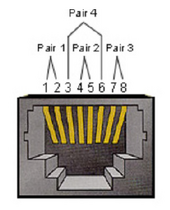 |
1 | TX+ | Output from Display |
| 2 | TX- | Output from Display | |
| 3 | RX+ | Input to Display | |
| 4 | BI_D3+ | For 1G case | |
| 5 | BI_D3- | For 1G case | |
| 6 | RX- | Input to Display | |
| 7 | BI_D4+ | For 1G case | |
| 8 | BI_D4- | For 1G case | |
| frame | GND |
RS-232 Communication Setting
LAN Communication Setting
Command Message Reference
PC sends to LFD command packet followed by “CR”. Every time PC sends control command to Display, the Display shall respond as follows:
Protocol
Set-Function Listing
The PC can control the Display for specific actions. The Set-Function command allows you to control the Display behavior at a remote site through the RS-232 port. The Set-Function packet format consists of 9 bytes.
Set-Function Description
| Length | Total Byte of Message excluding “CR” |
| LFD ID | Identification for each of Display (01~98; default is 01) ID “99” means to apply the set command for all connected displays. Under such circumstances, only ID#1 display has to reply. The LFD ID can be set via the OSD menu for each Display. |
| Command Type | Identify command type, "s" (0x73h): Set Command "+" (0x2Bh): Valid Command Reply "-" (0x2Dh): Invalid Command Reply |
| Command | Function command code: One byte ASCII code. |
| Value [1~3] | Three bytes ASCII that defines the value. |
| CR | 0x0D |
Set-Function Format
Send: (Command Type="s")
| Name | Length | ID | Command Type | Command | Value1 | Value2 | Value3 | CR |
|---|---|---|---|---|---|---|---|---|
| Byte Count | 1 Byte | 2 Byte | 1 Byte | 1 Byte | 1 Byte | 1 Byte | 1 Byte | 1 Byte |
| Bytes Order | 1 | 2~3 | 4 | 5 | 6 | 7 | 8 | 9 |
Reply: (Command Type="+" or "-")
| Name | Length | ID | Command Type | CR |
|---|---|---|---|---|
| Byte Count | 1 Byte | 2 Byte | 1 Byte | 1 Byte |
| Bytes Order | 1 | 2~3 | 4 | 5 |
Example 1: Set Brightness at 76 for Display (#02) and this; command is valid.
Send (Hex Format)
| Name | Length | ID | Command Type | Command | Value1 | Value2 | Value3 | CR |
|---|---|---|---|---|---|---|---|---|
| Hex | 0x38 | 0x30 0x32 |
0x73 | 0x24 | 0x30 | 0x37 | 0x36 | 0x0D |
Reply (Hex Format)
| Name | Length | ID | Command Type | CR |
|---|---|---|---|---|
| Hex | 0x34 | 0x30 0x32 |
0x2B | 0x0D |
Example 2: Set Brightness at 75 for Display (#02) and this; command is NOT valid.
Send (Hex Format)
| Name | Length | ID | Command Type | Command | Value1 | Value2 | Value3 | CR |
|---|---|---|---|---|---|---|---|---|
| Hex | 0x38 | 0x30 0x32 |
0x73 | 0x24 | 0x30 | 0x37 | 0x35 | 0x0D |
Reply (Hex Format)
| Name | Length | ID | Command Type | CR |
|---|---|---|---|---|
| Hex | 0x34 | 0x30 0x32 |
0x2D | 0x0D |
Set-Function Table
A. Basic Function
| Set Function | Length | ID | Command | Command | Value Range | Comments | |
|---|---|---|---|---|---|---|---|
| Type (ASCII) | Code (ASCII) |
Code (Hex) |
(Three ASCII bytes) | ||||
| Power ON *3.2.1/OFF (Standby) |
8 | s | ! | 21 | 000: STBY 001: ON |
1. The Power-on via LAN control may works only under specific mode. To see display UG for details. *3.1.1
2. “WOL by MAC address” may available as alternative. *3.2.1 | |
| Input Select | 8 | s | " | 22 | 000: TV
001: AV 005: DVI 008: Internal memory 00A: Embedded/Main(Android) |
1. No need for USB
2. For the case of two or more same sources, the 2nd digital is used to indicate the extension. 3. The HEX of 00A is 30 30 41. 4. 00Z is reserved for cycle mode *3.3.1 5. Using 2nd digi to identify DP or Type C. 0 and even numbers stand for DP; odd numbers stand for Type C *3.3.2 | |
| Brightness | 8 | s | $ | 24 | 000 ~ 100 900: Bright down (-1) 901: Bright up (+1) *3.1.1 |
||
| Backlight *3.2.0 | 8 | A | B | 42 | 000~100 | 1. For Android platform whose main mode is controlled by backlight and the other sources are controlled by brightness.
2. Derived from Color calibration. *3.2.0 | |
| Power Lock | 8 | s | 4 | 34 | 000: Unlock 001: Lock |
*See note in details | |
| Volume | 8 | s | 5 | 35 | 000 ~ 100 900: Volume down(-1) 901:Volume up(+1) |
||
| Mute | 8 | s | 6 | 36 | 000: OFF 001: ON (mute) | ||
| Button Lock | 8; | s | 8 | 38 | 000: Unlock 0001: Lock |
*See note in details | |
| Menu Lock | 8 | s | > | 3E | 000: Unlock 001: Lock |
*See note in details | |
| Number *3.1.1 | 8 | s | @ | 40 | 000~009 | ||
| Key Pad *3.1.1 | 8 | s | A | 41 | 000: UP 001: DOWN 002: LEFT 003: RIGHT 004: ENTER 005: INPUT 006: MENU/(EXIT) 007: EXIT | ||
| Remote Control | 8 | s | B | 42 | 000: Disable 001: Enable 002: Pass through |
Disable: RCU will be no function
Enabled: RCU controls normally Pass through: Display will bypass the RC code to connected device via the RS-232 port, but not react itself. | |
| Restore Default | 8 | s | ~ | 7E | 000 | Recover to factory settings | |
NOTE:
1. Behavior at Lock Modes
| Lock Mode | Behavior |
|---|---|
| Button Lock | 1. Lock all buttons on the front panel and RCU, except for “Power” 2. All the SET functions should be workable via RS-232, even the ones with according hot key in RCU like Mute,…etc. |
| MENU Lock | 1. Lock the “MENU’ key of front panel and RCU 2. The Factory and Hospitality modes should not be blocked for the model using MENU-combined key to enter these two modes. Alternative approach will be indicated separately if any limitation by model. |
| POWER Lock | 1. Lock the “POWER” key on the front and RCU. 2. The SET_POWER ON/OFF should be workable via RS-232, but does not mean the POWER lock will be released under this case. 3. Can not be unlocked by reset in OSD setting 4. Will auto AC power-on in power-lock 5. Under power-lock, the set will not enter power saving when no PC signal and neither turn off when no other video signals after 15 minutes. |
| Remote Control Disable | Lock the RCU keys, but keep the front panel buttons workable. |
2. Wake-on-LAN by MAC address as alternative for SET Power on (Length=126 Bytes)
| 6 Bytes | 6 Bytes (#1) | 6 Bytes (#2) | ... | 6 Bytes (#16) | 24 Bytes |
|---|---|---|---|---|---|
| 0xFF FF ... FF | MAC address | MAC address | ... | MAC address | 0x00 00 … 00 |
B. Optional Function
| Set Function | Length | ID | Command | Command | Value Range | Comments | |
|---|---|---|---|---|---|---|---|
| Type (ASCII) | Code (ASCII) |
Code (Hex) |
(Three ASCII bytes) | ||||
| Input Select Cycle *3.3.1 | 8 | s | " | 22 | 00Z | Inputs in cycle loop depend on display itself | |
| Contrast | 8 | s | # | 23 | 000~100 | ||
| Sharpness | 8 | s | % | 25 | 000~100 | ||
| Color | 8 | s | & | 26 | 000~100 | ||
| Tint | 8 | s | ' | 27 | 000~100 | ||
| Backlight On_Off *3.2.3 | 8 | s | ( | 29 | 000: Off 001: On |
Keep both “Backlight On_Off” and “Function On_Off” for backward compatibility *3.3.2 | |
| Color Mode | 8 | s | ) | 29 | 000: Normal 001: Warm 002: Cold 003: Personal |
||
| Freeze On_Off | 8 | s | . | 2A | 000: Off 001: On |
Keep both “Freeze On_Off” and “Function On_Off” for backward compatibility *3.3.2 | |
| Surround sound | 8 | s | - | 2D | 000: Off 001: On |
||
| Bass | 8 | s | . | 2E | 000~100 | ||
| Treble | 8 | s | / | 2F | 000~100 | ||
| Balance | 8 | s | 0 | 30 | 000~100 | 050 is central | |
| Picture Size | 8 | s | 1 | 31 | 000: FULL (16:9) 001: NORMAL (4:3) 002: REAL (1:1) *3.1.0 |
||
| OSD language | 8 | s | 2 | 32 | 000: English 001: French 002: Spanish |
Could be extended for more supported languages by model | |
| PIP-Mode | 8 | s | 9 | 39 | 000: Off 001: PIP(POP) 002: PBP |
||
| PIP-Sound select | 8 | s | : | 3A | 000: Main 001: Sub |
||
| PIP-Position | 8 | s | ; | 3B | 000: Up 001: Down 002: Left 003: Right |
||
| PIP-Input | 8 | s | 7 | 37 *2.9 |
000: TV 005: DVI 007: Slot-in PC (OPS/SDM)/HDBT 00A: Embedded/Main (Android) |
Value range is same as SET-Input select | |
| Tiling-Mode | 8 | s | P | 50 | 000: Off 001: On |
(for video wall) | |
| Tiling-Compensation | 8 | s | Q | 51 | 000: Off 001: On |
(for video wall) Bezel width compensation | |
| Tiling-H by V Monitors | 8 | s | R | 52 | 01x~09x: H 0x1~0x9: V |
(for video wall) 1. 2nd digital for H monitors. 2. 3rd digital for V monitors | |
| Tiling-Position | 8 | s | S | 53 | 001~025 | (for video wall) Copy the screen of Position# to identified display | |
| Date: Year | 8 | s | V | 56 | Y17~Y99 | Last 2 digits (20)17~(20)99 | |
| Date: Month | 8 | s | V | 56 | M01~M12 | 2 digits | |
| Date: Day | 8 | s | V | 56 | D01~D31 | 2 digits | |
| Time: Hour | 8 | s | W | 57 | H00~H23 | 24-hr format. 2 digits. | |
| Time: Min | 8 | s | W | 57 | M00~M59 | 2 digits | |
| Time: Sec | 8 | s | W | 57 | S00~S59 | 2 digits | |
| Customized Hot Keys *3.2.6 | 8 | s | X | 58 |
001~999 |
||
| Function On_Off *3.3.2 | 8 | s | = | 3D |
001: Backlight OFF |
||
NOTE:
1. Tiling definition of H Monitors, V Monitors, and Position

2. Set Date example
| Date: | 2017-3/15 |
| Send: | 0x 38 30 31 73 56 59 31 37 0D (“Y17”) |
| Send: | 0x 38 30 31 73 56 4D 30 33 0D (“M03”) |
| Send: | 0x 38 30 31 73 56 44 31 35 0D (“D15”) |
3. Set Time example
| Time: | 16:27:59 |
| Send: | 0x 38 30 31 73 57 48 31 36 0D (“H16”) |
| Send: | 0x 38 30 31 73 57 4D 32 37 0D (“M27”) |
| Send: | 0x 38 30 31 73 57 53 35 39 0D (“S59”) |
Get-Function Listing
The PC can interrogate the LFD for specific information. The Get-Function packet format consists of 9 bytes which is similar to the Set-Function packet structure. Note that the “Value” byte is always = 000.
Get-Function Description
| Length | Total Byte of Message excluding “CR”. |
| TV/DS ID | Identification for each of TV/DS (01~98; default is 01). |
| Command Type |
Identify command type, |
| Command | Function command code: One byte ASCII code. |
| Value [1~3] | Three bytes ASCII that defines the value. |
| CR | 0x0D |
Get-Function Format
Send: (Command Type=“g”)
| Name | Length | ID | Command Type | Command | Value1 | Value2 | Value3 | CR |
|---|---|---|---|---|---|---|---|---|
| Byte Count | 1 Byte | 2 Byte | 1 Byte | 1 Byte | 1 Byte | 1 Byte | 1 Byte | 1 Byte |
| Bytes Order | 1 | 2~3 | 4 | 5 | 6 | 7 | 8 | 9 |
Reply: (Command Type="r" or "-")
If the Command is valid, Command Type="r"
| Name | Length | ID | Command Type | Command | Value1 | Value2 | Value3 | CR |
|---|---|---|---|---|---|---|---|---|
| Byte Count | 1 Byte | 2 Byte | 1 Byte | 1 Byte | 1 Byte | 1 Byte | 1 Byte | 1 Byte |
| Bytes Order | 1 | 2~3 | 4 | 5 | 6 | 7 | 8 | 9 |
If the Command is NOT valid, Command Type="-"
| Name | Length | ID | Command Type | CR |
|---|---|---|---|---|
| Byte Count | 1 Byte | 2 Byte | 1 Byte | 1 Byte |
| Bytes Order | 1 | 2~3 | 4 | 5 |
Example 1: Get Brightness from TV-05 and this command is valid. The Brightness value is 67.
Send (Hex Format)
| Name | Length | ID | Command Type | Command | Value1 | Value2 | Value3 | CR |
|---|---|---|---|---|---|---|---|---|
| Hex | 0x38 | 0x30 0x35 |
0x67 | 0x62 | 0x30 | 0x30 | 0x30 | 0x0D |
Reply (Hex Format)
| Name | Length | ID | Command Type | Command | Value1 | Value2 | Value3 | CR |
|---|---|---|---|---|---|---|---|---|
| Hex | 0x38 | 0x30 0x35 |
0x72 | 0x62 | 0x30 | 0x36 | 0x37 | 0x0D |
Example 2: Get Color from Display (#05), but the Color command is not supported by this model.
Send (Hex Format)
| Name | Length | ID | Command Type | Command | Value1 | Value2 | Value3 | CR |
|---|---|---|---|---|---|---|---|---|
| Hex | 0x38 | 0x30 0x35 |
0x67 | 0x26 | 0x30 | 0x30 | 0x30 | 0x0D |
Reply (Hex Format)
| Name | Length | ID | Command Type | CR |
|---|---|---|---|---|
| Hex | 0x34 | 0x30 0x35 |
0x2D | 0x0D |
Get-Function Table
A. Basic Function
| Get Function | Length | ID | Command | Command | Response Range | Comments | |
|---|---|---|---|---|---|---|---|
| Type (ASCII) | Code (ASCII) | Code (Hex) | (Three ASCII bytes) | ||||
| Get-Brightness | 8 | g | b | 62 | 000 ~ 100 | ||
| Get-Backlight *3.2.0 | 8 | a | B | 42 | 000 ~ 100 | 1. For Android platform whose main mode is controlled by backlight and the other sources are controlled by brightness. 2. Dervied from Color calibration. *3.2.0 | |
| Get-Volume | 8 | g | f | 66 | 000 ~ 100 | ||
| Get-Mute | 8 | g | g | 67 | 000: OFF 001: ON (muted) |
||
| Get-Input select | 8 | g | j | 6A | 000 ~ 100 | 1. 1st digit for signal dection: 0 means "no signal"; 1 means "signal detected". 2. 2nd & 3rd digit: See Set-Function table. | |
| Get-Power status: ON/STBY | 8 | g | l | 6C | 001: ON 000: STBY |
||
| Get-Remote control | S | g | n | 6E | 000: Disable 001: Enable 002: Pass through |
Get RCU mode status | |
| Get-Power lock | 8 | g | o | 6F | 000: Unlock 001: Lock |
||
| Get-Button lock | 8 | g | p | 70 | 000: Unlock 001: Lock |
||
| Get-Menu lock | 8 | g | l | 6C | 000: Unlock 001: Lock |
||
| Get-ACK | 8 | g | z | 7A | 000 | This command is used to test the communication link. | |
| Get-Thermal | 8 | g | 0 | 30 | 000~100: 0~+100 deg C -01~99: -1~99 deg C |
||
| Get-Operation hour | 8 | g | 1 | 31 | 000 | 1. Accumlated hours in 6-digit integer (000,001~999,999) *3.2.0 2. Can not be reset when FW update and Factory initiation *3.2.2 3. Reply in new 32-byte format *3.2.0 | |
| Get-Device name | 8 | g | 4 | 34 | 000 | Reply in new 32-byte format *3.2.0 | |
| Get-MAC address | 8 | g | 5 | 35 | 000 | (for models with LAN) Reply in new 32-byte format *3.2.0 | |
| Get-IP address *3.2.0 | 8 | g | 6 | 36 | 000 | (for models with LAN) Reply in new 32-byte format *3.2.0 | |
| Get-Serial number *3.2.0 | 8 | g | 7 | 37 | 000 | Reply in new 32-byte format *3.2.0 | |
| Get-FW version *3.2.0 | 8 | g | 8 | 38 | 000 | Reply in new 32-byte format *3.2.0 | |
NOTE:
1. Get Operation Hour example
Assumed the accumulated operation hour is 123,456 hrs
| Send: 0x 38 30 31 67 31 30 30 30 0D (Get Operation hour) | |
| Reply: 0x 32 30 31 72 31 31 32 33 34 35 36 00 00 … 00 00 0D |
2. Get Device Name example
Assumed the device name is CDE-5500
| Send: 0x 38 30 31 67 34 30 30 30 0D (Get Device Name) | |
| Reply: 0x 32 30 31 72 34 43 44 45 2D 35 35 30 30 00 00 … 00 00 0D |
Assumed the device name is “NMP-302#1”
| Send: 0x 38 30 31 67 34 30 30 30 0D (Get Device Name) | |
| Reply: 0x 32 30 31 72 34 4E 4D 50 2D 33 30 32 23 31 00 00 …00 00 0D |
3. Get MAC address example
Assumed the MAC address is 00:11:22:aa:bb:cc
| Send: 0x 38 30 31 67 35 30 30 30 0D (Get MAC add) | |
| Reply: 0x 32 30 31 72 35 30 30 31 31 32 32 61 61 62 62 63 63 00 00…00 00 0D |
4. Get IP address example
Assumed the IP address is 192.168.100.2
| Send: 0x 38 30 31 67 36 30 30 30 0D (Get IP address) | |
| Reply: 0x 32 30 31 72 36 31 39 32 2E 31 36 38 2E 31 30 30 2E 32 00 00…00 000D |
5. Get Serial number example
Assumed the Serial number is ABC180212345
| Send: 0x 38 30 31 67 37 30 30 30 0D (Get Serial number) | |
| Reply: 0x 32 30 31 72 37 41 42 43 31 38 30 32 31 32 33 34 35 00 00…00 00 0D |
6. Get FW version example
Assumed the FW version is 3.02.001
| Send: 0x 38 30 31 67 38 30 30 30 0D (Get FW version) | |
| Reply: 0x 32 30 31 72 38 33 2E 30 32 2E 30 30 31 00 00…00 00 0D |
B. Optional Function
| Get Function | Length | ID | Command | Command | Response Range | Comments | |
|---|---|---|---|---|---|---|---|
| Type (ASCII) | Code (ASCII) | Code (Hex) | (Three ASCII bytes) | ||||
| Get-Contrast | 8 | g | a | 61 | 000 ~ 100 | ||
| Get-Sharpness | 8 | g | c | 63 | 000 ~ 100 | ||
| Get-Color | 8 | g | d | 64 | 000 ~ 100 | ||
| Get-Tint | 8 | g | e | 65 | 000 ~ 100 | ||
| Get-Backlight On_Off *3.2.3 | 8 | g | h | 68 | 000: OFF 001: ON |
Keep both "Backlight On_Off" and "Function On_Off" for backward compatibility *3.3.2 | |
| Get Freeze On_Off *3.2.5 | 8 | g | i | 69 | 000: OFF 001: ON |
Keep both "Freeze On_Off" and "Function On_Off" for backward compatibility *3.3.2 | |
| Get-PIP mode | 8 | g | t | 74 | 000: OFF 001: PIP (POP) 002: PBP |
||
| Get-PIP input | 8 | g | u | 75 | 000 ~ | See "Set-Input select" | |
| Get-Tiling Mode | 8 | g | v | 76 | 000: OFF 001: ON |
(for video wall) | |
| Get-Tiling Compensation | 8 | g | w | 77 | 000:OFF 001: ON |
(for video wall) Bezel width compensation | |
| Get-Tiling H by V monitors | 8 | g | x | 78 | 01x~09x: H monitors 0x1~0x9: V monitors |
(for video wall) 1. 2nd digital for H monitors 2. 3rd digital for V monitors | |
| Get-Tiling position | 8 | g | y | 79 | 000: OFF 001~025 |
(for video wall) Copy the screen of Position# to identified display | |
| Get-Date: Year | 8 | g | 2 | 32 | Y00~Y00 | Last two digits: (20)17~(20)99 | |
| Get-Date: Month | 8 | g | 2 | 32 | M00~M00 | 2 digits | |
| Get-Date: Day | 8 | g | 2 | 32 | D00~D00 | 2 digits | |
| Get-Time: Hour | 8 | g | 3 | 33 | H00~H00 | 24-hr format. 2 digits | |
| Get-Time: Min | 8 | g | 3 | 33 | M00~M00 | 2 digits | |
| Get-Time: Sec | 8 | g | 3 | 33 | S00~S00 | 2 digits | |
| Get-Smart hub *3.3.0 | 8 | g | : | 3A | 000: all 00A: Amb_Temp 00B: Amb_Humidity 00C: Amb_Light 00D: Amb_PIR detection |
1. Reply in new 32-byte format. Each sub-item length is fixed 6 bytes. *3.3.0 2. Allow get data separately or once for all. *3.3.0 | |
| Get-Function On_Off *3.3.2 | 8 | G | = | 3D | 001: Backlight OFF 101: Backlight ON 002: Freeze OFF 102: Freeze ON 003: Touch OFF 103: Touch ON |
||
NOTE:
1. Get Date example
Assumed the current date of display#01 as below:
| Date: | 2017-3/15 |
| Send: | 0x 38 30 31 67 32 59 30 30 0D (Get Date:Year) |
| Reply: | 0x 38 30 31 72 32 59 31 37 0D (“Y17”) |
| Send: | 0x 38 30 31 67 32 4D 30 30 0D (Get Date:Month) |
| Reply: | 0x 38 30 31 72 32 4D 30 33 0D (“M03”) |
| Send: | 0x 38 30 31 67 32 44 30 30 0D (Get Date:Day) |
| Reply: | 0x 38 30 31 72 32 44 31 35 0D (“D15”) |
2. Get Time example
Assumed the current time of display#01 as below:
| Time: | 16:27:59 |
| Send: | 0x 38 30 31 67 33 48 30 30 0D (Get Time:Hour) |
| Reply: | 0x 38 30 31 72 33 48 31 36 0D (“H16”) |
| Send: | 0x 38 30 31 67 33 4D 30 30 0D (Get Time:Min) |
| Reply: | 0x 38 30 31 72 33 4D 32 37 0D (“M27”) |
| Send: | 0x 38 30 31 67 33 53 30 30 0D (Get Time:Sec) |
| Reply: | 0x 38 30 31 72 33 53 35 39 0D (“S59”) |
3. Get Smart hub example
Assumed Amb_Temp is -5 deg C, Amb_Humidity is 30%, Amb_Light is 80, Amb_PIR detection is 1
| Send: | 0x 38 30 31 67 3A 30 30 30 0D (Get all Smart hub info) |
| Reply: | 0x 32 30 31 72 3A 41 2D 30 35 2E 30 42 30 33 30 2E 30 43 30 30 30 38 30 44 30 30 30 30 31 00 00 00 0D (A-05.0B030.0C00080D00001) |
| Send: | 0x 38 30 31 67 3A 30 30 41 0D (Get Amb_Temp only) |
| Reply: | 0x 32 30 31 72 3A 41 2D 30 35 2E 30 00 00 …00 00 0D (A-05.0) |
C. Auto Reply *3.2.2
The display will send out the updated data/status automatically without GET query from the host whenever the following data/status is changed by the user through any of the available ways like: remote control unit, front control panel keys, or touch screen.
Remote Control Pass-through Mode
When the PC sets the Display to Remote Control Pass through mode, the Display will send a 7-byte packet (followed by “CR”) in response to remote control unit (RCU) button activation.
In this mode the RCU will have no effect on the Display function. For example: “Volume+” will not change the volume of the Display, but instead only send the “Volume+” code to the PC over the RS-232 port.
IR Pass Through-Function format
Reply: (Command Type="p")
| Name | Length | ID | Command Type | RCU Code1 (MSB) |
RCU Code2 (LSB) |
CR |
|---|---|---|---|---|---|---|
| Byte Count | 1 Byte | 2 Byte | 1 Byte | 1 Byte | 1 Byte | 1 Byte |
| Bytes Order | 1 | 2~3 | 4 | 5 | 6 | 7 |
Example 1: Remote Control Pass-through when “VOL+” key is pressed for Display (#5)
Send (Hex Format)
| Name | Length | ID | Command Type | RCU Code1 (MSB) |
RCU Code2 (LSB) |
CR |
|---|---|---|---|---|---|---|
| Hex | 0x36 | 0x30 0x35 |
0x70 | 0x31 | 0x30 | 0x0D |
| Key | Code (HEX) | Basic *3.1.1 | Optional *3.1.1 |
|---|---|---|---|
| 1 | 01 | V | |
| 2 | 02 | V | |
| 3 | 03 | V | |
| 4 | 04 | V | |
| 5 | 05 | V | |
| 6 | 06 | V | |
| 7 | 07 | V | |
| 8 | 08 | V | |
| 9 | 09 | V | |
| 0 | 0A | V | |
| - | 0B | V | |
| RECALL (LAST) | 0C | V | |
| INFO (DISPLAY) | 0D | V | |
| 0E | |||
| ASPECT (ZOOM, SIZE) | 0F | V | |
| VOLUME UP (+) | 10 | V | |
| VOLUME DOWN (-) | 11 | V | |
| MUTE | 12 | V | |
| CHANNEL/PAGE UP (+)/BRIGHTNESS+ | 13 | V | |
| CHANNEL/PAGE DOWN(-)/BRIGHTNESS- | 14 | V | |
| POWER | 15 | V | |
| SOURCES (INPUTS) | 16 | V | |
| 17 | |||
| 18 | |||
| SLEEP | 19 | V | |
| MENU | 1A | V | |
| UP | 1B | V | |
| DOWN | 1C | V | |
| LEFT (-) | 1D | V | |
| RIGHT (+) | 1E | V | |
| OK (ENTER, SET) | 1F | V | |
| EXIT | 20 | V | |
| 21 | |||
| 22 | |||
| 23 | |||
| 24 | |||
| 25 | |||
| 26 | |||
| 27 | |||
| 28 | |||
| 29 | |||
| 2A | |||
| 2B | |||
| RED (F1) | 2C | V | |
| GREEN (F2) | 2D | V | |
| YELLOW (F3) | 2E | V | |
| BLUE (F4) | 2F | V |
NOTE:
1. This IR-pass-through code is different from the RCU key code.
2. Special control sequence for POWER key under IR-pass through mode.
2-1. When Display is OFF and receives the IR POWER code: Display will turn itself ON, then forward the POWER code to the host via RS-232.
2-2. When Display is ON and receives the IR POWER code: Display will forward the POWER code to the host via RS-232, then turn OFF itself.
2-3. When SET-POWER LOCK is enabled, the Display will not respond to POWER key pressing.
3. The VOLUME UP and VOLUME DOWN code will repeatedly output when you press and hold the keys.
Specifications
| Item | Category | Specifications |
|---|---|---|
| Model | P/N. | IFP6552-2/2F/2ED |
| No. | VS19364 |
Display Modes
DisplayPort
| Resolution | Refresh Rate (@) |
|---|---|
| 640 x 480 | 60, 67, 72 Hz |
| 800 x 600 | 56, 60, 72, 75 Hz |
| 832 x 624 | 75 Hz |
| 1024 x 768 | 60, 70, 75 Hz |
| 1152 x 864 | 75 Hz |
| 1152 x 870 | 75 Hz |
| 1280 x 720 | 60 Hz |
| 1280 x 960 | 60 Hz |
| 1280 x 1024 | 60, 75 Hz |
| 1360 x 768 | 60, 75 Hz |
| 1366 x 768 | 60 Hz |
| 1440 x 900 | 60 Hz |
| 1600 x 1200 | 60 Hz |
| 1680 x 1050 | 60 Hz |
| 1920 x 1080 | 60 Hz |
| 1920 x 1200 | 60 Hz |
| 3840 x 2160 | 25, 30, 50, 60 Hz |
HDMI
| Resolution | Refresh Rate (@) |
|---|---|
| 640 x 480 | 60, 67, 72, 75 Hz |
| 800 x 600 | 56, 60, 72, 75 Hz |
| 832 x 624 | 75 Hz |
| 1024 x 768 | 60, 70, 75 Hz |
| 1152 x 864 | 75 Hz |
| 1152 x 870 | 75 Hz |
| 1280 x 720 | 60 Hz |
| 1280 x 960 | 60 Hz |
| 1280 x 1024 | 60, 75 Hz |
| 1360 x 768 | 60, 75 Hz |
| 1366 x 768 | 60 Hz |
| 1440 x 900 | 60 Hz |
| 1600 x 1200 | 60 Hz |
| 1680 x 1050 | 60 Hz |
| 1920 x 1080 | 60 Hz |
| 1920 x 1200 | 60 Hz |
| 3840 x 2160 | 25, 30, 50, 60 Hz |
USB Type C
| Resolution | Refresh Rate (@) |
|---|---|
| 640 x 480 | 60, 67, 72 Hz |
| 800 x 600 | 56, 60, 72, 75 Hz |
| 832 x 624 | 75 Hz |
| 1024 x 768 | 60, 70, 75 Hz |
| 1152 x 864 | 75 Hz |
| 1152 x 870 | 75 Hz |
| 1280 x 720 | 60 Hz |
| 1280 x 960 | 60 Hz |
| 1280 x 1024 | 60, 75 Hz |
| 1360 x 768 | 60, 75 Hz |
| 1366 x 768 | 60 Hz |
| 1440 x 900 | 60 Hz |
| 1600 x 1200 | 60 Hz |
| 1680 x 1050 | 60 Hz |
| 1920 x 1080 | 60 Hz |
| 1920 x 1200 | 60 Hz |
| 3840 x 2160 | 25, 30, 50, 60 Hz |
VGA
| Resolution | Refresh Rate (@) |
|---|---|
| 640 x 480 | 60, 67, 72 Hz |
| 800 x 600 | 56, 60, 72, 75 Hz |
| 832 x 624 | 75 Hz |
| 1024 x 768 | 60, 70, 75 Hz |
| 1152 x 864 | 75 Hz |
| 1152 x 870 | 75 Hz |
| 1280 x 720 | 60 Hz |
| 1280 x 960 | 60 Hz |
| 1280 x 1024 | 60, 75 Hz |
| 1360 x 768 | 60, 75 Hz |
| 1366 x 768 | 60 Hz |
| 1440 x 900 | 60 Hz |
| 1600 x 1200 | 60 Hz |
| 1680 x 1050 | 60 Hz |
| 1920 x 1080 | 60 Hz |
| 1920 x 1200 | 60 Hz |
HDMI Out
| Resolution | Refresh Rate (@) |
|---|---|
| 720 x 480 | 60 Hz |
| 1920 x 1080 | 60 Hz |
| 3840 x 2160 | 60 Hz |
Compliance Information
This section addresses all connected requirements and statements regarding regulations. Confirmed corresponding applications shall refer to nameplate labels and relevant markings on the unit.
FCC Compliant Statement
This device complies with part 15 of FCC Rules. Operation is subject to the following two conditions: (1) this device may not cause harmful interference, and (2) this device must accept any interference received, including interference that may cause undesired operation. This equipment has been tested and found to comply with the limits for a Class B digital device, pursuant to part 15 of the FCC Rules.
These limits are designed to provide reasonable protection against harmful interference in a residential installation. This equipment generates, uses, and can radiate radio frequency energy, and if not installed and used in accordance with the instructions, may cause harmful interference to radio communications. However, there is no guarantee that interference will not occur in a particular installation. If this equipment does cause harmful interference to radio or television reception, which can be determined by turning the equipment off and on, the user is encouraged to try to correct the interference by one or more of the following measures:
Warning: You are cautioned that changes or modifications not expressly approved by the party responsible for compliance could void your authority to operate the equipment.
Industry Canada Statement
CAN ICES-003(B) / NMB-003(B)
CE Conformity for European Countries

The device complies with the EMC Directive 2014/30/EU and Low Voltage Directive 2014/35/EU.
The following information is only for EU-member states:
The mark shown to the right is in compliance with the Waste Electrical and Electronic Equipment Directive 2012/19/EU (WEEE). The mark indicates the requirement NOT to dispose of the equipment as unsorted municipal waste, but use the return and collection systems according to local law.

Declaration of RoHS2 Compliance
This product has been designed and manufactured in compliance with Directive 2011/65/EU of the European Parliament and the Council on restriction of the use of certain hazardous substances in electrical and electronic equipment (RoHS2 Directive) and is deemed to comply with the maximum concentration values issued by the European Technical Adaptation Committee (TAC) as shown below.
| Substance | Proposed Maximum Concentration | Actual Concentration |
|---|---|---|
| Lead (Pb) | 0.1% | < 0.1% |
| Mercury (Hg) | 0.1% | < 0.1% |
| Cadmium (Cd) | 0.01% | < 0.01% |
| Hexavalent Chromium (Cr6⁺) | 0.1% | < 0.1% |
| Polybrominated biphenyls (PBB) | 0.1% | < 0.1% |
| Polybrominated diphenyl ethers (PBDE) | 0.1% | < 0.1% |
| Bis (2-ethylhexyl) phthalate (DEHP) | 0.1% | < 0.1% |
| Butyl benzyl phthalate (BBP) | 0.1% | < 0.1% |
| Dibutyl phthalate (DBP) | 0.1% | < 0.1% |
| Diisobutyl phthalate (DIBP) | 0.1% | < 0.1% |
Certain components of products as stated above are exempted under the Annex III of the RoHS2 Directives as noted below. Examples of exempted components are:
ENERGY STAR® Statement
ENERGY STAR® is a U.S. Environmental Protection Agency voluntary program that helps businesses and individuals save money and protect our climate through superior energy efficiency. Products that earn the ENERGY STAR® prevent greenhouse gas emissions by meeting strict energy efficiency criteria or requirements set by the U.S. Environmental Protection Agency.
As an ENERGY STAR® Partner, ViewSonic is determined to meet the ENERGY STAR® Guidelines and mark all certified models with the ENERGY STAR® logo.
The following logo appears on all ENERGY STAR®-certified models:

Indian Restriction of Hazardous Substances
Restriction on Hazardous Substances statement (India). This product complies with the “India E-waste Rule 2011” and prohibits use of lead, mercury, hexavalent chromium, polybrominated biphenyls or polybrominated diphenyl ethers in concentrations exceeding 0.1 weight % and 0.01 weight % for cadmium, except for the exemptions set in Schedule 2 of the Rule.
Indian Restriction of Hazardous Substances
Restriction on Hazardous Substances statement (India). This product complies with the “India E-waste Rule 2011” and prohibits use of lead, mercury, hexavalent chromium, polybrominated biphenyls or polybrominated diphenyl ethers in concentrations exceeding 0.1 weight % and 0.01 weight % for cadmium, except for the exemptions set in Schedule 2 of the Rule.
Product Disposal at End of Product Life
ViewSonic® respects the environment and is committed to working and living green. Thank you for being part of Smarter, Greener Computing. Please visit the ViewSonic® website to learn more.
USA & Canada:
https://www.viewsonic.com/us/go-green-with-viewsonic
Europe:
https://www.viewsonic.com/eu/environmental-social-governance/recycle
Taiwan:
https://recycle.moenv.gov.tw/
For EU users, please contact us for any safety/accident issue experienced with this product:
 |
ViewSonic Europe Limited Haaksbergweg 75 1101 BR Amsterdam Netherlands |
 |
+31 (0) 650608655 |
 |
EPREL@viewsoniceurope.com |
 |
https://www.viewsonic.com/eu/ |
Copyright Information
Copyright© ViewSonic® Corporation, 2023. All rights reserved.
Macintosh and Power Macintosh are registered trademarks of Apple Inc.
Microsoft, Windows, and the Windows logo are registered trademarks of Microsoft Corporation in the United States and other countries.
ViewSonic® and the three birds logo are registered trademarks of ViewSonic® Corporation.
VESA is a registered trademark of the Video Electronics Standards Association. DPMS, DisplayPort, and DDC are trademarks of VESA.
ENERGY STAR® is a registered trademark of the U.S. Environmental Protection Agency (EPA).
As an ENERGY STAR® partner, ViewSonic® Corporation has determined that this product meets the ENERGY STAR® guidelines for energy efficiency.
Disclaimer: ViewSonic® Corporation shall not be liable for technical or editorial errors or omissions contained herein; nor for incidental or consequential damages resulting from furnishing this material, or the performance or use of this product.
In the interest of continuing product improvement, ViewSonic® Corporation reserves the right to change product specifications without notice. Information in this document may change without notice.
No part of this document may be copied, reproduced, or transmitted by any means, for any purpose without prior written permission from ViewSonic® Corporation.
IFP52-2_UG_ENG_1a_20231003
For technical support or product service, see the table below or contact your reseller.
Americas
| Country/Region | Website |
|---|---|
| Canada | https://www.viewsonic.com/us |
| Latin America | https://www.viewsonic.com/la |
| United States | https://www.viewsonic.com/us |
Asia Pacific & Africa
| Country/Region | Website |
|---|---|
| Australia | https://viewsonic.com/au/ |
| Bangladesh | https://www.viewsonic.com/bd/ |
| 中国 (China) | https://www.viewsonic.com.cn |
| 香港 (繁體中文) | https://www.viewsonic.com/hk/ |
| Hong Kong (English) | https://www.viewsonic.com/hk-en/ |
| India | https://www.viewsonic.com/in/ |
| Indonesia | https://www.viewsonic.com/id/ |
| Israel | https://www.viewsonic.com/il/ |
| 日本 (Japan) | https://www.viewsonic.com/jp/ |
| Korea | https://www.viewsonic.com/kr/ |
| Malaysia | https://www.viewsonic.com/my/ |
| Middle East | https://www.viewsonic.com/me/ |
| Myanmar | https://www.viewsonic.com/mm/ |
| Nepal | https://www.viewsonic.com/np/ |
| New Zealand | https://www.viewsonic.com/nz/ |
| Pakistan | https://www.viewsonic.com/pk/ |
| Philippines | https://www.viewsonic.com/ph/ |
| Singapore | https://www.viewsonic.com/sg/ |
| 臺灣 (Taiwan) | https://www.viewsonic.com/tw/ |
| ประเทศไทย | https://www.viewsonic.com/th/ |
| Việt Nam | https://www.viewsonic.com/vn/ |
| South Africa & Mauritius | https://www.viewsonic.com/za/ |
Europe
| Country/Region | Website |
|---|---|
| Europe | https://www.viewsonic.com/eu/ |
| France | https://www.viewsonic.com/fr/ |
| Deutschland | https://www.viewsonic.com/de/ |
| Қазақстан | https://www.viewsonic.com/kz/ |
| Россия | https://www.viewsonic.com/ru/ |
| España | https://www.viewsonic.com/es/ |
| Türkiye | https://www.viewsonic.com/tr/ |
| Україна | https://www.viewsonic.com/ua/ |
| United Kingdom | https://www.viewsonic.com/uk/ |
Limited Warranty
ViewSonic® Smart White Board
What the warranty covers:
ViewSonic® warrants its products to be free from defects in material and workmanship during the warranty period. If a product proves to be defective in material or workmanship during the warranty period, ViewSonic® will, at its sole option, and as your sole remedy, repair or replace the product with a similar product. Replacement Product or parts may include remanufactured or refurbished parts or components. The repair or replacement unit or parts or components will be covered by the balance of the time remaining on the customer’s original limited warranty and the warranty period will not be extended. ViewSonic® provides no warranty for any third-party software whether included with the product or installed by the customer, installation of any unauthorized hardware parts or components (e.g. Projector Lamps). (Please refer to: “What the warranty excludes and does not cover” section).
Who the warranty protects:
This warranty is valid only for the first consumer purchaser.
What the warranty excludes and does not cover:
How to get service:
Limitation of implied warranties:
There are no warranties, express or implied, which extend beyond the description contained herein including the implied warranty of merchantability and fitness for a particular purpose.
Exclusion of damages:
ViewSonic’s liability is limited to the cost of repair or replacement of the product. ViewSonic® shall not be liable for:
Effect of state law:
This warranty gives you specific legal rights, and you may also have other rights which vary from state to state. Some states do not allow limitations on implied warranties and/or do not allow the exclusion of incidental or consequential damages, so the above limitations and exclusions may not apply to you.
Sales outside the U.S.A. and Canada:
For warranty information and service on ViewSonic® products sold outside of the U.S.A. and Canada, contact ViewSonic® or your local ViewSonic® dealer.
The warranty period for this product in mainland China (Hong Kong, Macao, and Taiwan Excluded) is subject to the terms and conditions of the Maintenance Guarantee Card.
For users in Europe and Russia, full details of warranty provided can be found at: http://www.viewsonic.com/eu/ under “Support/Warranty Information”.
Mexico Limited Warranty
ViewSonic® Smart White Board
What the warranty covers:
ViewSonic® warrants its products to be free from defects in material and workmanship, under normal use, during the warranty period. If a product proves to be defective in material or workmanship during the warranty period, ViewSonic® will, at its sole option, repair or replace the product with a like product. Replacement product or parts may include remanufactured or refurbished parts or components & accessories.
Who the warranty protects:
This warranty is valid only for the first consumer purchaser.
What the warranty excludes and does not cover:
How to get service:
Limitation of implied warranties:
There are no warranties, express or implied, which extend beyond the description contained herein including the implied warranty of merchantability and fitness for a particular purpose.
Exclusion of damages:
ViewSonic®’s liability is limited to the cost of repair or replacement of the product. ViewSonic® shall not be liable for:
| Contact Information for Sales & Authorized Service (Centro Autorizado de Servicio) within Mexico: | |
|---|---|
|
Name, address, of manufacturer and importers:
| |
| NÚMERO GRATIS DE ASISTENCIA TÉCNICA PARA TODO MÉXICO: 001.866.823.2004 | |
|
Hermosillo:
|
Villahermosa:
|
|
Puebla, Pue. (Matriz):
|
Veracruz, Ver.:
|
|
Chihuahua:
|
Cuernavaca:
|
|
Distrito Federal:
|
Guadalajara, Jal.:
|
|
Guerrero Acapulco:
|
Monterrey:
|
|
MERIDA:
|
Oaxaca, Oax.:
|
|
Tijuana:
|
FOR USA SUPPORT:
|
Read these instructions carefully, keep them in a safe place, and follow all warnings and instructions.
General Safety Precautions
Installation

Power Cord Safety
Handling
Troubleshooting
Blue Light Filter and Eye Health
The monitor’s blue-light blocking technology helps reduce eye strain by minimizing blue-light emission, while maintaining the correct color balance, and eliminating screen flicks.
Below are some tips to help reduce the effect of eye strain:
Remote control does not work
| Troubleshooting Checks | Yes/No | Possible Solutions |
|---|---|---|
| Are there any obstacles between the remote control and display? | Yes | Remove the obstacle(s). |
| No | Aim the remote control at the display's IR receiver within the effective distance and angles when performing an operation. | |
| Are the batteries installed correctly? | Yes | If the remote control still does not work, try another set of new batteries to confirm the current batteries have power. |
| No | Install the batteries again. |
The display shuts down unexpectedly
| Troubleshooting Checks | Yes/No | Possible Solutions |
|---|---|---|
| Is the display in sleep mode? | Yes | Re‑plug the video cable connecting to an external computer to wake the display up. |
| No | Check the power connection between the display and the power outlet. | |
| Is there a power outage in your area? | Yes | Unplug the power cord from the power outlet and wait until the power outage is over before turning the display back on. |
| No | Try another power outlet or use some other electrical device to confirm the same power outlet is working. |
Touch is slow or inaccurate
| Troubleshooting Checks | Yes/No | Possible Solutions |
|---|---|---|
| Is myViewBoard open? | Yes | Save the content, then restart the display. |
| No | Open the “Restart App“ from the taskbar on the external computer to re-launch the application with the last-edited content. If the touch function lag still occurs, restart the display. |
|
| Does the display have dirt, dust, or moisture on the screen? | Yes | Follow the procedure in the “Maintenance” section to clean the screen. |
| No | Restart the display. |
The display is not responding to touch
| Troubleshooting Checks | Yes/No | Possible Solutions |
|---|---|---|
| Is the USB Type C cable connected to the display? | Yes | Check that the cable is connected to the display’s USB Type C port that supports touch functionality. We recommend using the USB Type C cable that comes with the display to ensure optimal performance. |
| No | Connect the cable, ensuring a secure connection. Check that the cable supports data transfer. | |
| Is the HDMI or DisplayPort cable connected to the display? | Yes | Reconnect the included USB touch cable from the display to the external computer to turn on the touch function. |
| No | Connect both the video cable (HDMI or DisplayPort) and USB touch cable. |
Speakers are not working properly
| Troubleshooting Checks | Yes/No | Possible Solutions |
|---|---|---|
| Does only one speaker have sound? | Yes | Try another audio cable or audio system to confirm the display’s speakers are still working. |
| No | Press the Volume button on the remote control to set the volume at a moderate level. | |
| Do both speakers have no sound? | Yes | Check that the audio source is correctly set on both the display and connected device, and that the connected device is turned on. |
| No | Restart the display. | |
| Is the display connected to a Bluetooth device? | Yes | Re‑pair the display with your Bluetooth device. |
| No | Check that the connected device is properly connected to the appropriate port of the display. | |
| Is there buzzing or whining noises? | Yes | Route the audio cable away from the display or power supply cable to prevent electrical interference. |
| No | Press the Volume button on the remote control to set the volume at a moderate level. |
Image is not displayed correctly
| Troubleshooting Checks | Yes/No | Possible Solutions |
|---|---|---|
| Does the video cable appear damaged? | Yes | Replace the video cable. If the image is still not displayed correctly, restart the display. |
| No | Try a different video cable or use another video source to determine if the display is still working correctly. |